University of Seville
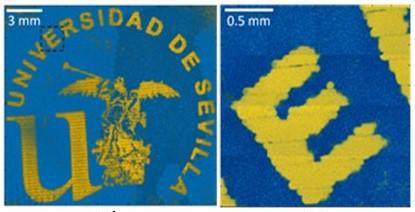
University of Seville researchers, in collaboration with the University of Nottingham, have managed to create the first image of nanoparticles of stabilised gold with biodegradable and biocompatible systems that have been obtained with 3D-printng techniques. The image chosen for this test was the logo of the University of Seville.
This achievement will have applications in the pharmaceutical industry, such as in the preparation of biocompatible biosensors based in gold, which have already been shown to be effective in the detection of carcinogenic cells and tumour biomarkers. In recent years, additive manufacturing, also commonly known as 3D printing, has been recognised as the ideal technology for applications that require intricate geometries or personalisation. Its manufacturing based on layers will reduce general small-batch manufacturing costs in comparison with traditional production methods. This has caught the attention of the pharmaceutical industry, which has seen a gateway to the total personalisation of treatment in this technology.
The research was centred on the technique called inkjet printing. This offers advantages such as its high resolution and the possibility it offers of being able to print more than one material during the same printing process. Using this technique, the researchers have proposed the manufacturing of systems that could potentially be used as personalised biosensors based on the conductivity and biocompatibility of gold.
Currently, existing gold inks for Inkjet Printing are based in nanoparticles of this metal, but they are highly unstable, as they bind together easily and are difficult to print. For that reason, the development of stale gold inks that are easy to print with has been invaluable.
The team was led by Ana Alcudia Cruz, of the Department of Organic and Pharmaceutical Chemistry from the Pharmacy faculty at the University of Seville, in collaboration of the group led by Rafael Prado Gotor of the Department of Physical Chemistry, from the Chemistry Faculty at the University of Seville, and Ricky Wilman, from the University of Nottingham (United Kingdom). For the first time, it managed to use polymers (polyurethanes) with a comb structure, which they themselves developed, to generate tiny gold nanoparticles with extremely high stability that was tested over time.
To that end, various polymers were prepared from arabinose, a sugar that is easily acquired in nature and that gives the material developed total biocompatibility and biodegradability, so avoiding polluting residues generated by the traditional polymers that are oil-derived.
For the first time this type of polymer has been used for the preparation of gold nanoparticles. These nanoparticles, obtained from three different chemically functionalised polymers, proved to be sufficiently small (maximum 10nm) to be printed in Inkjet printing and were stable for a period of at least six months. Once the printability of each ink was tested, that which showed the best balance of properties was selected and used to print the logo of our university. In the image, obtained by TOF-SIMS, the gold can be observed (in yellow), which forms the outline of the logo, on a polymer background (in blue). This is the first image of gold nanoparticles stabilised with biodegradable and biocompatible systems that has been obtained with 3D-printng techniques.
Design of highly stabilized nanocomposite inks based on biodegradable polymer-matrix and gold nanoparticles for Inkjet Printing
Belen Begines, Ana Alcudia, Raul Aguilera-Velazquez, Guillermo Martinez, Yinfeng He, Ricky Wildman, Maria-Jesus Sayagues, Aila Jimenez-Ruiz & Rafael Prado-Gotor
Scientific Reports volume 9, Article number: 16097 (2019)
DOI: 10.1038/s41598-019-52314-2
Contact information:
Ana Alcudia Cruz
Department of Organic and Pharmaceutical Chemistry at University of Seville
Phone: 95.455.67.38
Rafael Prado Gotor
Department of Physical Chemistry at University of Seville
Phone: 95.455.67.33
Synthesis and Physicochemistry of Nanoparticles Group
Ricky Wilman
Department of Chemical and Environmental Engineering at University of Nottingham
Ricky.Wildman@nottingham.ac.uk
Phone: 0115 8466893
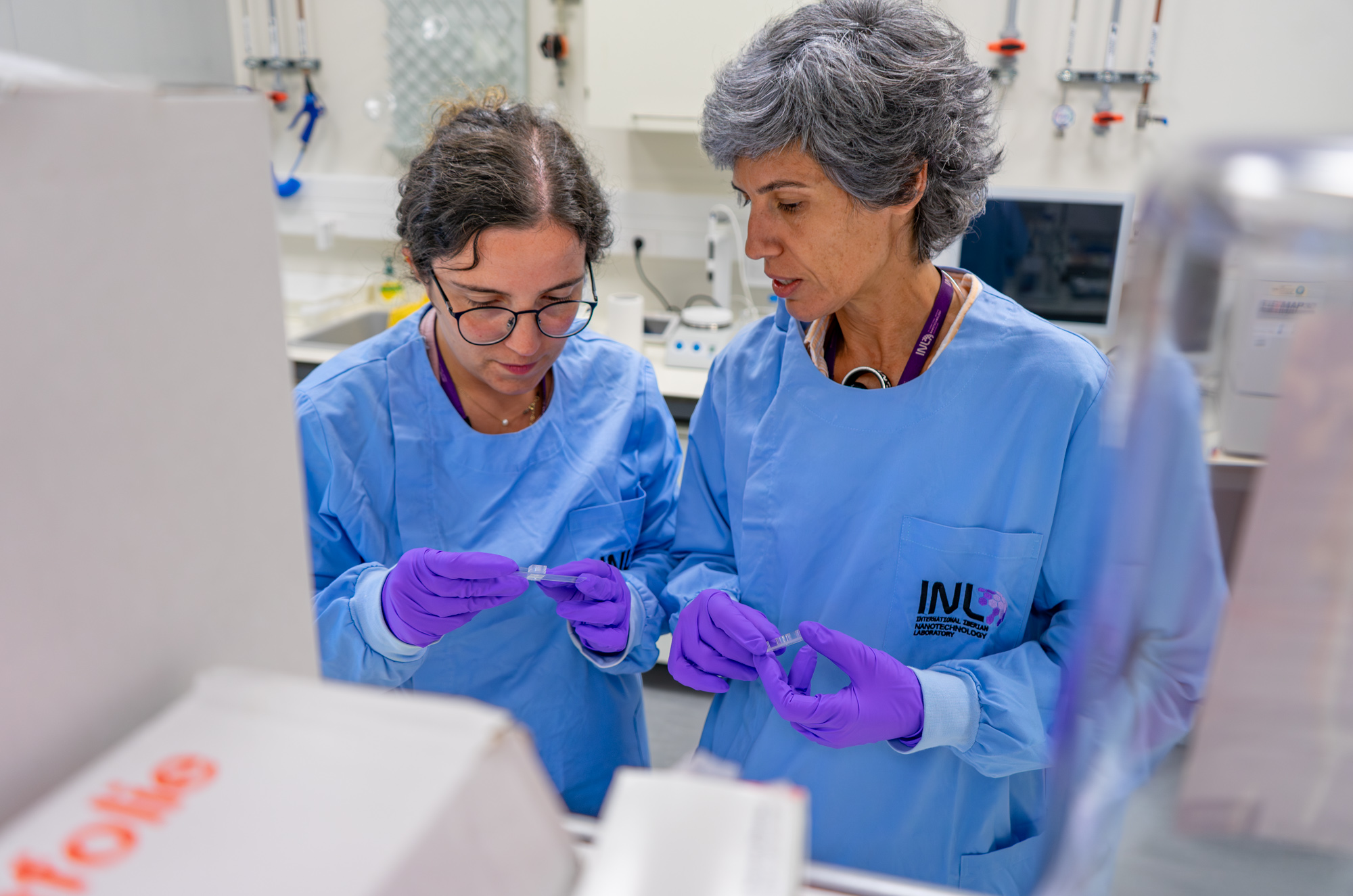
Nanoparticles are found in many everyday products, from cosmetics and textiles to air pollution. While they offer many benefits, scientists still need better ways to understand how long-term exposure may affect our skin. Researchers from Alfaro-Moreno group at INL have developed a new skin-on-a-chip platform that closely mimics human skin, providing a more realistic way to study how nanoparticles interact with our body's first protective barrier. Unlike conventional lab models (which grow...
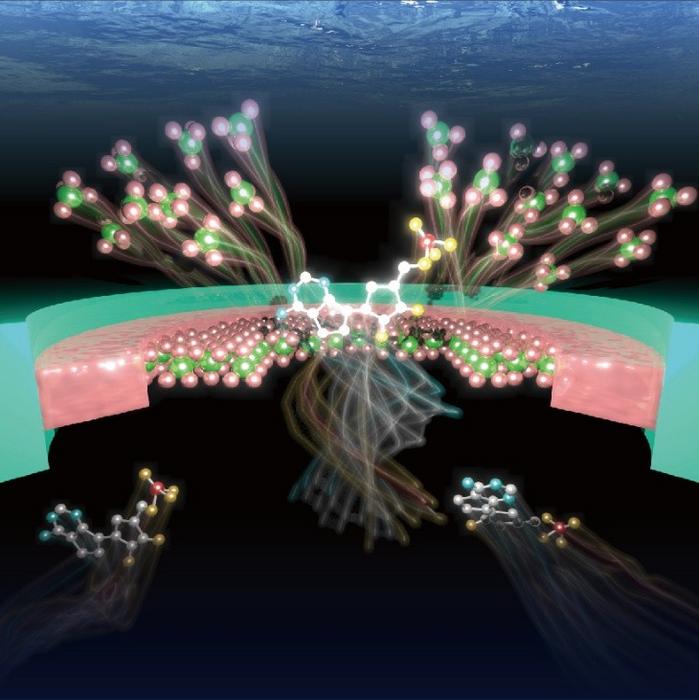
Researchers at the University of Osaka have developed an autonomous solid-state nanopore that senses molecules, generates electrical signals, and retains memory of recent events without external control. Chemical reactions inside the pore continuously reshape its structure, producing molecule-specific signal patterns. Machine learning distinguished DNA nucleotides and amino acids from these signatures. Published in ACS Nano.
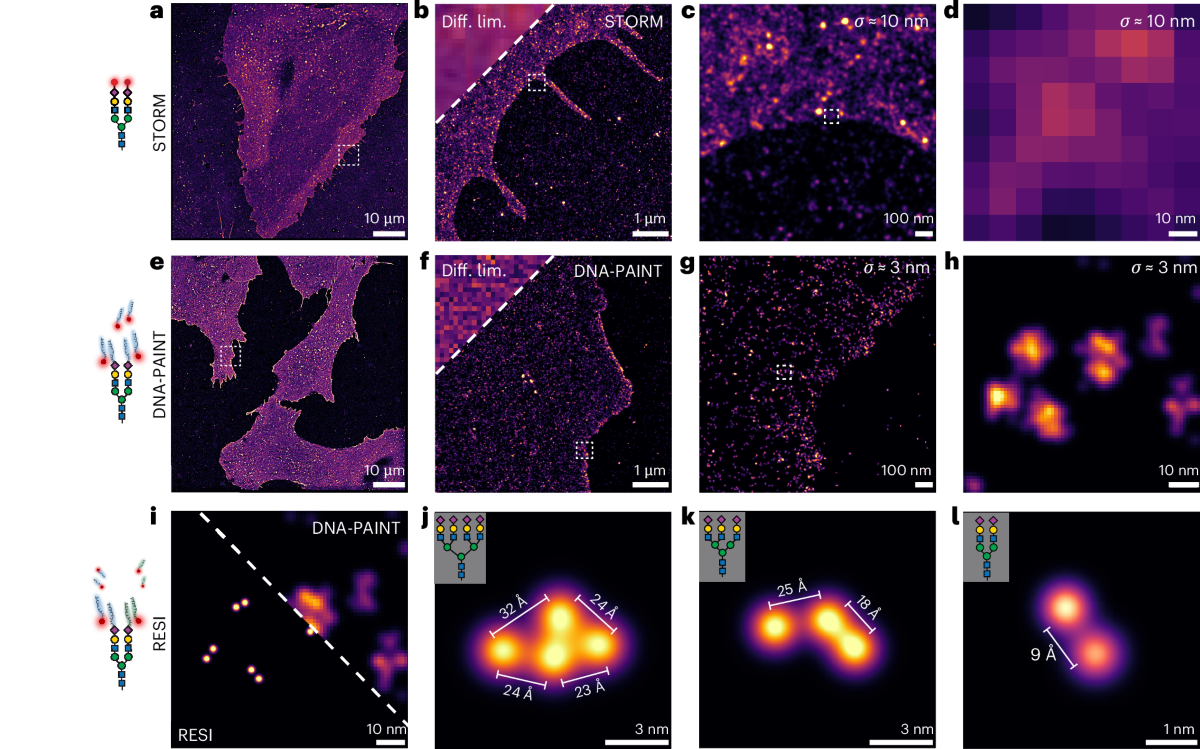
Scientists have developed “glycan atlassing,” a breakthrough super-resolution technique that maps the precise nanoscale architecture of sugars on cell surfaces. Published in Nature Nanotechnology, the method reveals that the spatial organization of glycans encodes critical information about cell state — opening powerful new possibilities for cancer diagnostics, stem cell research, and precision nanomedicine.
