École polytechnique fédérale de Lausanne (EPFL)
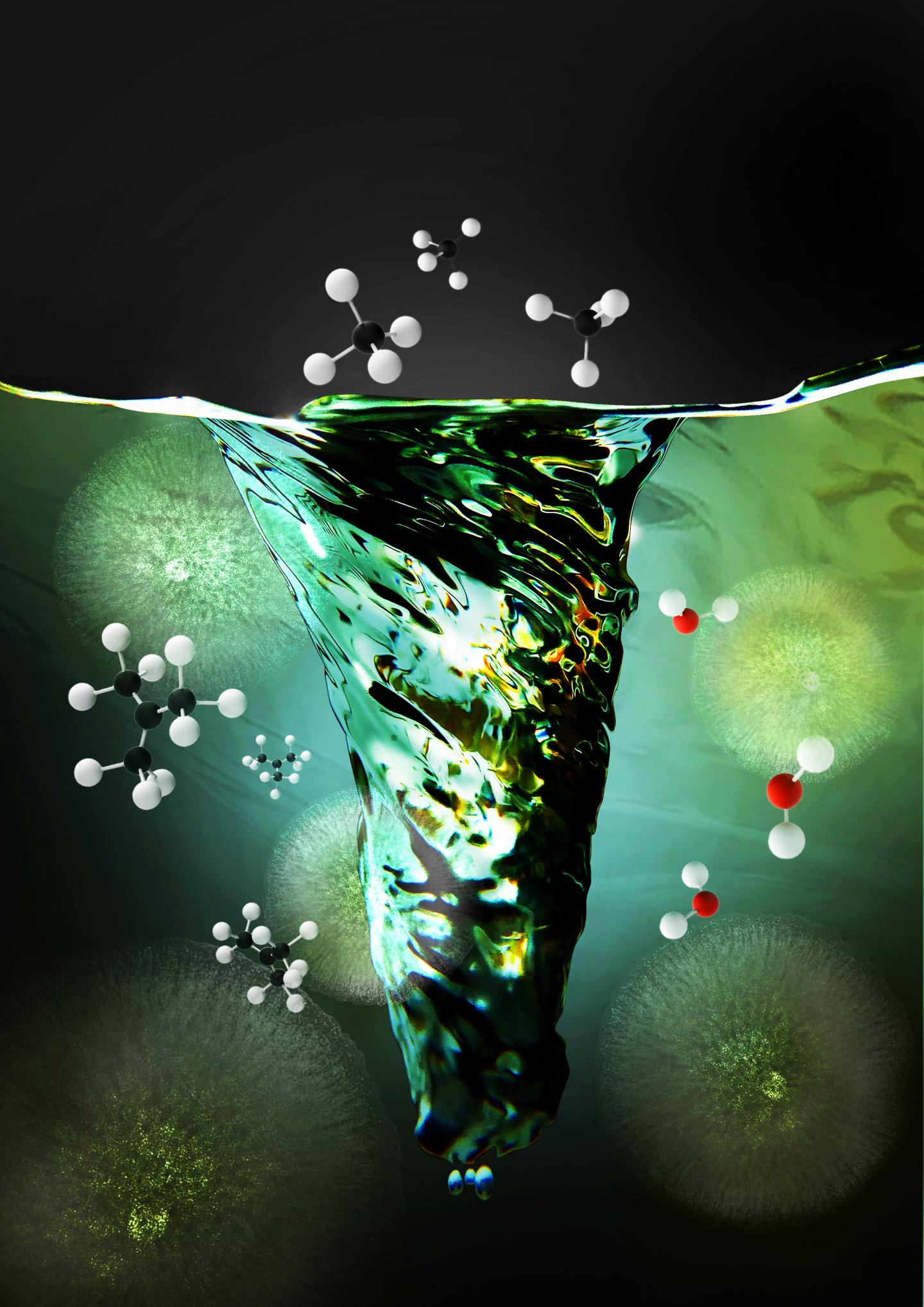
Atomic layer deposition (ALD) involves stacking layers of atoms on top of each other like pancakes. The atoms come from a vaporized material called a precursor. ASD is a well-established technique for manufacturing microelectronics like semiconductors and magnetic heads for sound recording, as well as sensors for bioengineering and diagnostics.
However, using ALD for depositing layers on larger surfaces has been a struggle, especially when it comes to manufacturing materials that must be kept at low cost, e.g. catalysts and solar devices.
"The sticking point is not necessarily making the right material but making it cheaply," explains Professor Jeremy Luterbacher, head of EPFL's Laboratory of Sustainable and Catalytic Processing (LPDC). "Coating larger surface areas with gas-phase methods requires long deposition times, and huge excesses of precursor, both of which increase costs," adds Benjamin Le Monnier, the PhD student who performed most of the research.
Now, the LPDC has developed a solution. Using ALD in a liquid phase, the scientists can produce materials indistinguishable from those made in the gas phase, with far cheaper equipment and no excess precursors.
Greater precision cuts costs
The researchers achieved this breakthrough by carefully measuring the ratio of the reacting precursors before injecting them onto the surface of a substrate. This way, they used exactly the right amount of precursor, with no leftovers that can cause unwanted reactions or be wasted.
The new method also reduces costs by requiring only standard lab equipment for chemical synthesis. It can also be easily scaled up to coat more than 150 g of material with the same cheap equipment, without loss of coating quality. The technique can even achieve coatings that are not possible using gas-phase ALD, e.g. by using non-volatile precursors.
"We believe that this technique could greatly democratize the use ALD on catalysts and other high surface area materials," says Luterbacher.
Atomic layer deposition on dispersed materials in liquid phase by stoichiometrically limited injections
Benjamin P. Le Monnier, Frederick Wells, Farzaneh Talebkeikhah, Jeremy S. Luterbacher
Advanced Materials 11 November 2019
Contact information:
Professor Jeremy Luterbacher
Head of EPFL's Laboratory of Sustainable and Catalytic Processing (LPDC)
jeremy.luterbacher@epfl.ch
Phone: +41 21 693 31 14
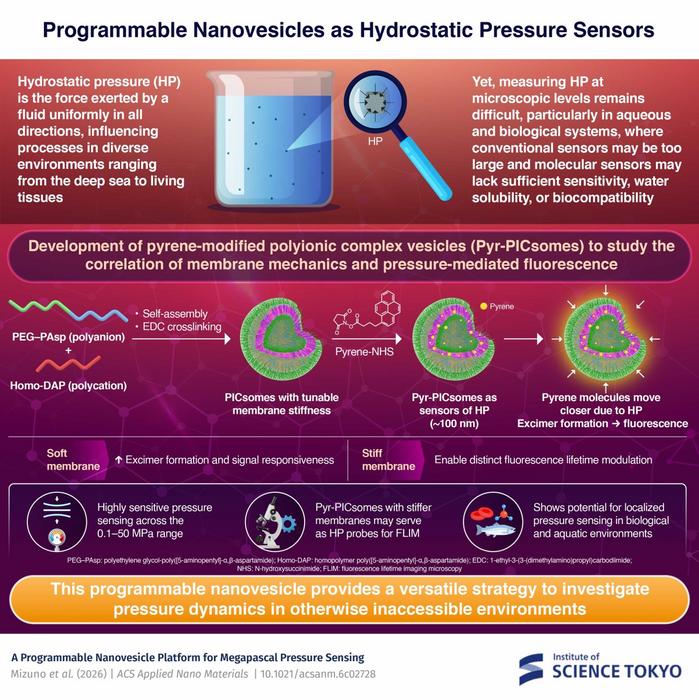
Pyrene-modified polyionic complex vesicles, or Pyr-PICsomes, convert hydrostatic pressure into measurable fluorescence. Crosslinking density tunes membrane stiffness, which governs sensing behavior: soft vesicles give strong excimer-to-monomer ratio changes from 0.1 to 50 MPa, while stiff membranes respond through fluorescence lifetime, suiting lifetime imaging.
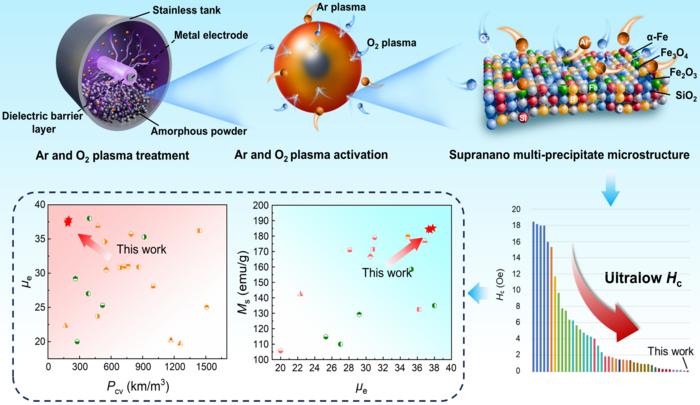
Ar/O₂ plasma treatment generates supranano α-Fe, Fe₃O₄, SiO₂ and Fe₂O₃ precipitates just 0.8–2.5 nm across amorphous powder surfaces, creating nucleation sites that ease magnetic-moment reversal. The resulting soft magnetic composite combines 0.13 Oe coercivity, 37.3 permeability, 185 emu g⁻¹ saturation magnetization and 191.18 kW m⁻³ core loss at 1 MHz and 20 mT. The surface route avoids bulk composition changes, aiding scale-up for high-frequency inductors and power chokes.
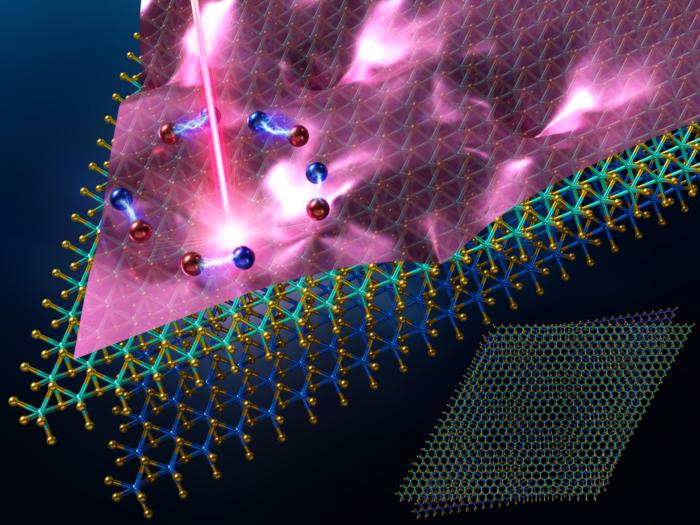
Researchers at MANA have introduced a theoretical framework that extracts hidden disorder from complex photoluminescence spectra in twisted MoSe2/WSe2 moiré heterostructures, bypassing unreliable peak-by-peak analysis. By tracking how simple descriptors like peak and average energy vary spatially, the work reveals a hierarchy of disorder, from micrometer-scale background variations to localized exciton-trapping defects.






