California Institute of Technology

A platform based on trapped atoms lays the groundwork for a broad range of quantum technologies and fundamental quantum research.
Researchers from the California Institute of Technology, including Alexandre Cooper-Roy, now IQC Research Associate and Senior Technical Lead, Quantum Simulation at Transformative Quantum Technologies (TQT), demonstrated unprecedented control, detection and entanglement of trapped atoms in a special state.
Cooper-Roy says the demonstration is a proof-of-concept for the platform. It can be used to build quantum simulators, quantum computers or quantum clocks with unparalleled accuracy and stability.
A previous platform using simpler atoms has been used in quantum experiments for years. Thanks to new technology and advanced experimental design, this platform uses more complicated atoms that allow for greater quantum advantage.
While trapping these atoms in multiple optical tweezers—a large collection of focused laser beams—the researchers were able to excite them to a special state called the Rydberg state to create useful entanglement between the atoms. Using entanglement opens the possibility to make gates for a new kind of quantum computer based on atoms.
Detecting these Rydberg atoms usually requires pushing them out of the traps. Instead, the researchers developed a new method, which allowed them to detect Rydberg atoms more accurately.
“This breakthrough brings a lot of confidence to the field and marks a clear path forward for quantum metrology [measurement] technology and quantum information processing platforms,” said Cooper-Roy.
Cooper-Roy and his team plan to build a world-class quantum simulator at the University using the new platform. By simulating systems of interacting quantum particles, it will be possible to study quantum phenomena inaccessible to a classical computer.
“There are only a few groups in the world using this kind of setup, and we’re bringing these cutting-edge techniques to Waterloo, which takes us to the next level,” said Cooper-Roy.
Reference:
High-fidelity entanglement and detection of alkaline-earth Rydberg atoms
Ivaylo S. Madjarov, Jacob P. Covey, Adam L. Shaw, Joonhee Choi, Anant Kale, Alexandre Cooper, Hannes Pichler, Vladimir Schkolnik, Jason R. Williams & Manuel Endres
https://doi.org/10.1038/s41567-020-0903-z
Contact:
Alexandre Cooper-Roy
Institute for Quantum Information and Matter, a National Science Foundation Physics Frontiers Center
California Institute of Technology
alcoop@caltech.edu

Billions of ytterbium ions in a yttrium orthovanadate crystal, coupled to a superconducting microwave resonator, synchronize through superradiance and pulse in a regular rhythm, forming a superradiant frequency comb. Unlike mirror-based combs, the spacing comes from atom-to-atom interference and the emission pairs microwaves with infrared light in step. The scheme could yield more stable combs and a microwave-optical link for connecting superconducting quantum circuits to fiber networks.
QuiX Quantum, Artilux and Brillink have received TechBridge funding for QSPAD, a 36-month project starting January 2027 to develop near-room-temperature GeSi single-photon detectors for photonic quantum computing.
Qluster, a Paris-based spin-off from Laboratoire Kastler Brossel, has raised €4.7 million in a pre-seed round led by Quantonation. The company is developing continuous-variable photonic quantum computers.
This week in nanotech
$18.9M raised
4 funding rounds · 31 deals tracked
New products
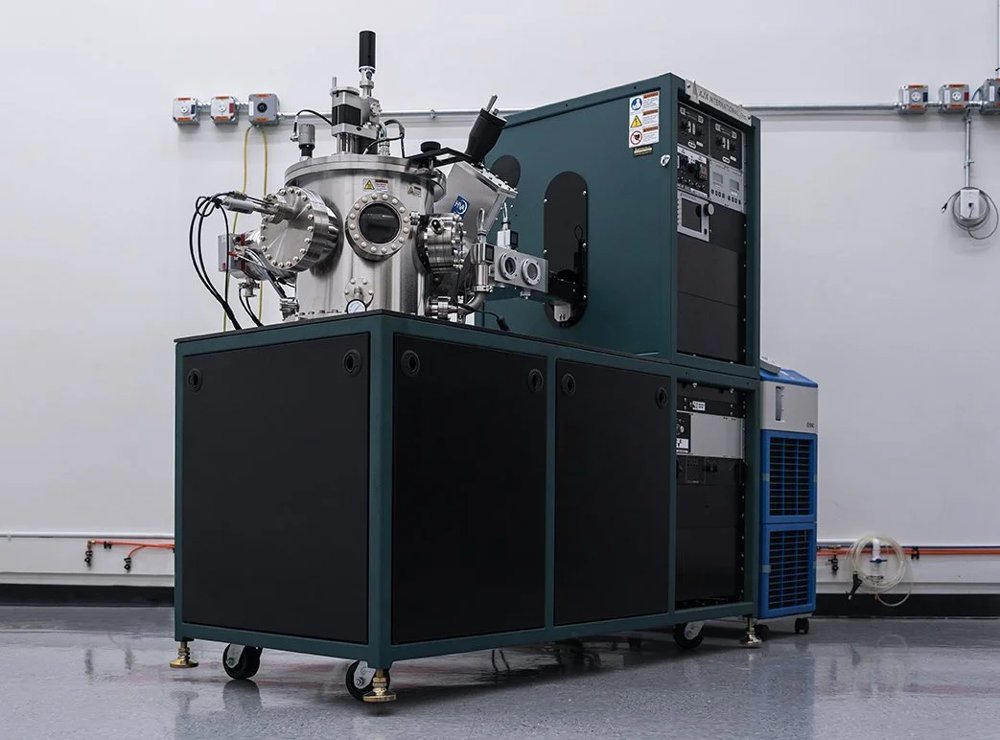 Orion Sputtering Deposition SystemsAJA International Featured
 Nion-compatible In Situ STEM Holders for Electrical BiasingHummingbird Scientific Featured
 Talphene™ Graphene AdditivesTalga Group
Market insights
Last 30 days: Semiconductors & Electronics was the busiest vertical: 52 of 170 events (31%).
Money raised per month
Behind the deal
Who led Eindhoven University of Technology’s $1.1M Grant?
See the investors with Insights Pro →