Institute for Research in Biomedicine (IRB) Barcelona
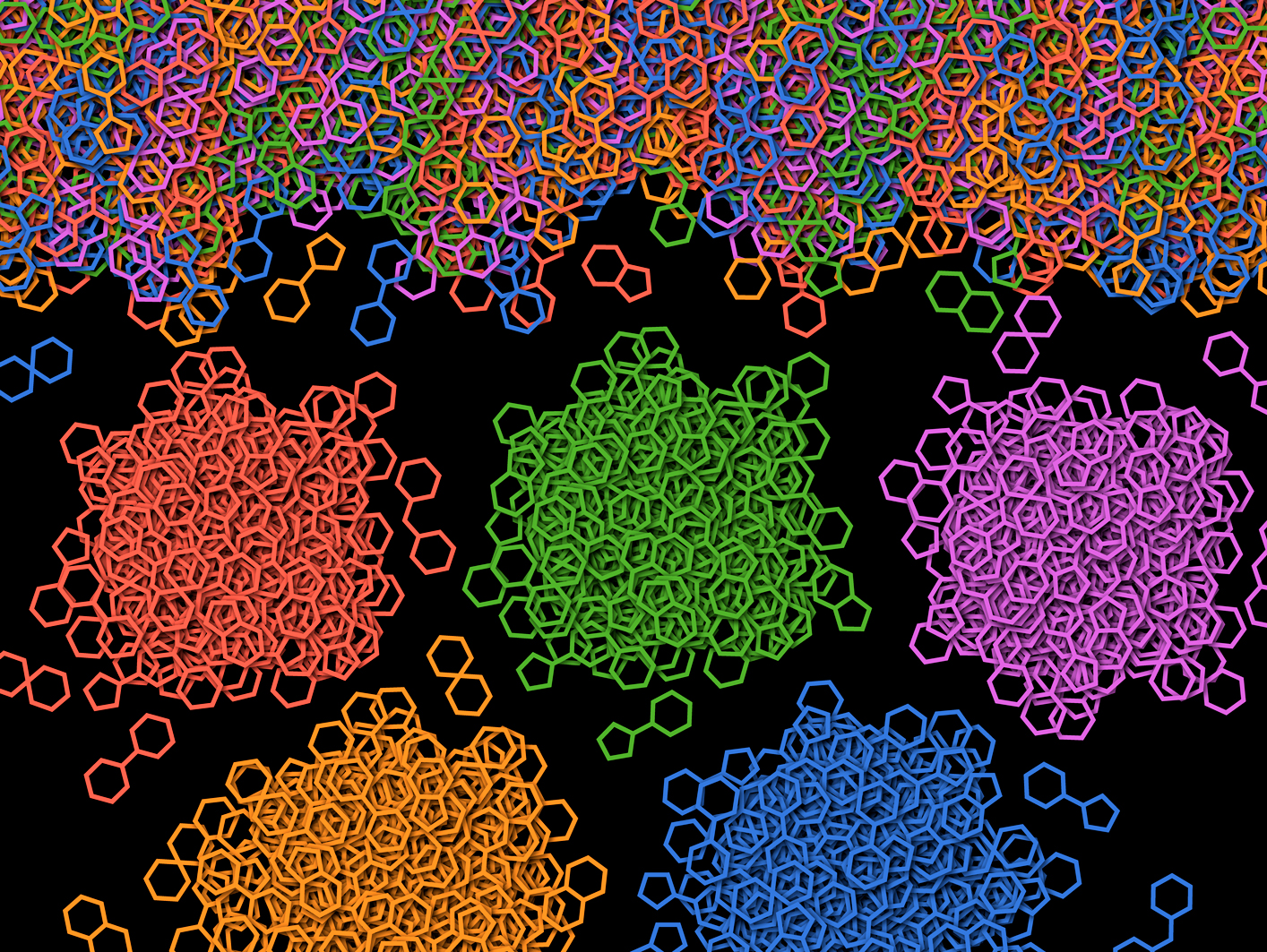
Knowledge of how a molecule interacts with the organism is crucial in order to consider its therapeutic potential. Headed by ICREA researcher Patrick Aloy, the Structural Bioinformatics and Network Biology (SBNS) lab at IRB Barcelona has presented the Chemical Checker, an on-line open-access tool that provides information on the effects exerted by more than 1M compounds in a wide range of biological settings. The Chemical Checker, published in Nature Biotechnology, offers a rich portrait of the small molecule data available in the public domain, opening an opportunity for making queries that would otherwise be impossible using chemical information alone.
The SBNB lab has already proven the tool's potential by reverting Alzheimer's disease's gene alterations in vitro, using approved drugs and experimental compounds. These scientists have also identified several compounds that could potentially substitute 'biologics' as treatments, such as antibody therapies, which show high specificity and efficiency, but are expensive and prone to pharmacokinetic issues. "We envision many applications for the Chemical Checker in the drug discovery process," explains Aloy "such as the formulation of logical queries to prioritize drug repositioning and combination opportunities, based on desired bioactivity traits."
The similarity principle
The Chemical Checker works upon the similarity principle. Similar compounds not only show analogous chemical properties but also share biological behaviour. Molecules with similar cell-sensitivity profiles or eliciting similar side-effects often have the same mechanism of action, even when their chemical structures appear to be unrelated.
The so-called 'similarity principle' has been the driving force of drug discovery and, in one flavour or another, the calculation of compound similarities lies behind most of the methods used to chart and exploit the chemical space. Evidence suggests that 'biological' similarities offer an alternative means to navigate chemical space, possibly unveiling non-obvious, clinically relevant similarities between compounds.
Five levels of increasing complexity
A drug is often an organic molecule (Chemistry) that interacts with one or several protein receptors (Targets), triggering perturbations of biological pathways (Networks) and eliciting phenotypic outcomes that can be measured in cell-based assays (Cells) before delivery to patients (Clinics). The Chemical Checker tool offers information of small molecules in these five levels of increasing complexity: Chemistry, Targets, Networks, Cells and Clinics.
"With the Chemical Checker, we are pushing the similarity principle beyond chemical properties, reaching various ambits of biology and enabling the right level of experimental detail at each step of the drug discovery pipeline," explains Miquel Duran.
A collaboration with Amazon to target COVID
The Chemical Checker has already led to a collaboration with Amazon to make available an open access database to provide researchers from around the world with an expanded portfolio of molecules with the potential to fight COVID-19. Amazon's expertise in text-mining, machine learning and natural language understanding has allowed the automatic analysis of scientific articles to be incorporated into the Chemical Checker.
To facilitate data access, the SBNB lab has built a web-based resource which allows users to run similarity searches for a given compound across the 25 available Chemical Checker bioactivity spaces. The full code of the resource and Chemical Checker signatures can be downloaded from the web, or simply accessed via a programming interface. The COVID platform is available here. https://sbnb.irbbarcelona.org/covid19/
Extending the small-molecule similarity principle to all levels of biology with the Chemical Checker
Miquel Duran-Frigola, Eduardo Pauls, Oriol Guitart-Pla, Martino Bertoni, Víctor Alcalde, David Amat, Teresa Juan-Blanco & Patrick Aloy
Nature Biotechnology (2020)
DOI: 10.1038/s41587-020-0502-7
Contact information:
ICREA Research Associate & Professor in University of Girona
miquel.duran@irbbarcelona.org
Phone: +34 93 40 39689
ICREA Research Professor & SBNS Group Leader
paloy@irbbarcelona.org
Phone: +34 93 40 39690
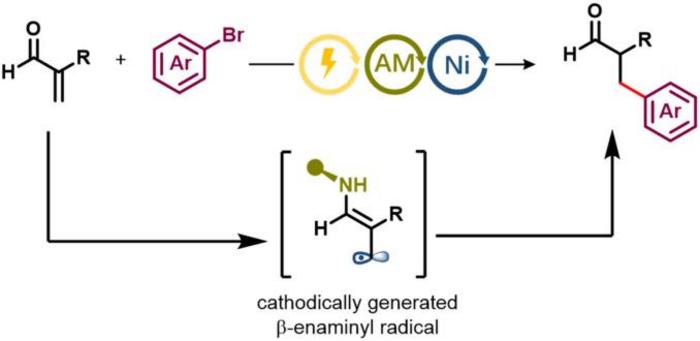
A primary amine and nickel dual catalytic system uses electrochemistry to reverse the usual reactivity of aminocatalytic intermediates, reducing an iminium ion at the cathode to a β-enaminyl radical instead of oxidizing an enamine. Run at 1.10 V with an inexpensive achiral amine, the method couples α-branched acroleins with aryl and alkenyl halides, giving β-functionalised aldehydes in up to 91% yield and 80% on gram scale.
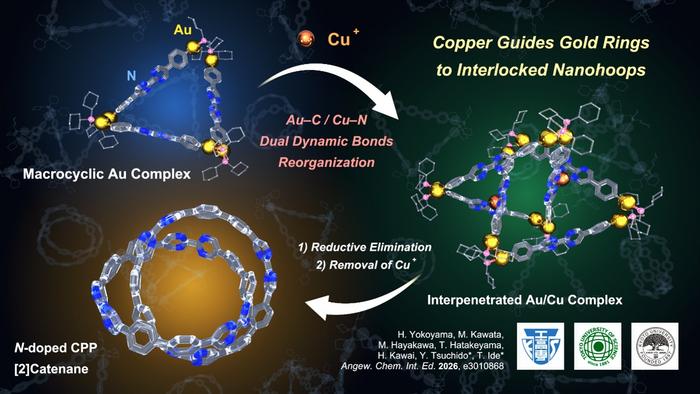
Researchers in Japan have combined gold(I) carbon bonds and copper(I) nitrogen coordination to assemble an interlocked catenane of nitrogen-doped carbon nanohoops in a single pot. Demetallation gave a metal-free [2]catenane of two fully conjugated [12]CPP rings in only eight steps, with a 2.9% overall yield that improves on conventional routes.
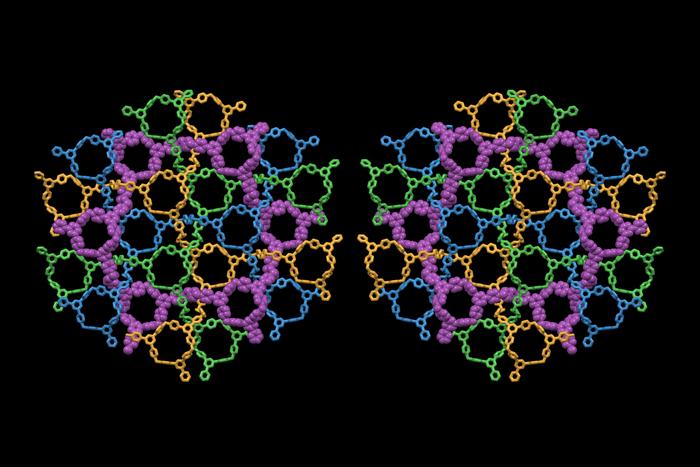
Chemists at UT Austin and Zhejiang University have developed a self-assembling molecularly woven fabric that separates benzene from cyclohexane far more efficiently than distillation, whose near-identical boiling points make conventional processing costly. Stacked layers of clockwise and counterclockwise chiral networks form a springy, reusable filter that absorbed 97.9% of benzene from a 50/50 mixture.
This week in nanotech
25 deals tracked
New products
 Ti-WCMBN Nanomaterialia Featured
 Orion Sputtering Deposition SystemsAJA International Featured
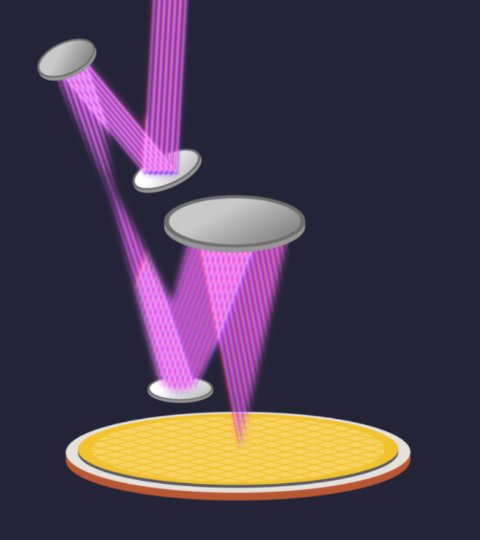 Aether®Lam Research
Market insights
Last 30 days: Semiconductors & Electronics was the busiest vertical: 55 of 176 events (31%).
Money raised per month