Rutgers University
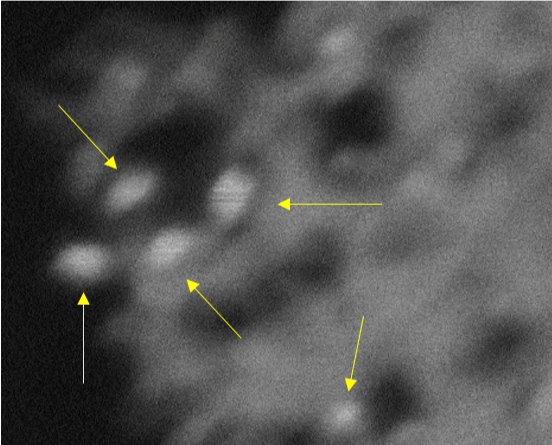
Imagine tiny crystals that "blink" like fireflies and can convert carbon dioxide, a key cause of climate change, into fuels.
A Rutgers-led team has created ultra-small titanium dioxide crystals that exhibit unusual "blinking" behavior and may help to produce methane and other fuels, according to a study in the journal Angewandte Chemie. The crystals, also known as nanoparticles, stay charged for a long time and could benefit efforts to develop quantum computers.
"Our findings are quite important and intriguing in a number of ways, and more research is needed to understand how these exotic crystals work and to fulfill their potential," said senior author Tewodros (Teddy) Asefa, a professor in the Department of Chemistry and Chemical Biology in the School of Arts and Sciences at Rutgers University-New Brunswick. He's also a professor in the Department of Chemical and Biochemical Engineering in the School of Engineering.
More than 10 million metric tons of titanium dioxide are produced annually, making it one of the most widely used materials, the study notes. It is used in sunscreens, paints, cosmetics and varnishes, for example. It's also used in the paper and pulp, plastic, fiber, rubber, food, glass and ceramic industries.
The team of scientists and engineers discovered a new way to make extremely small titanium dioxide crystals. While it's still unclear why the engineered crystals blink and research is ongoing, the "blinking" is believed to arise from single electrons trapped on titanium dioxide nanoparticles. At room temperature, electrons - surprisingly - stay trapped on nanoparticles for tens of seconds before escaping and then become trapped again and again in a continuous cycle.
The crystals, which blink when exposed to a beam of electrons, could be useful for environmental cleanups, sensors, electronic devices and solar cells, and the research team will further explore their capabilities.
A Blinking Mesoporous TiO2−x Composed of Nanosized Anatase with Unusually Long‐Lived Trapped Charge Carriers
Tao Zhang, Jingxiang Low, Jiaguo Yu, Alexei M. Tyryshkin, Eliška Mikmeková, Tewodros Asefa
Angewandte Chemie (22 May 2020)
Contact information:
Rutgers doctoral student
tz87@scarletmail.rutgers.edu
Professor, Department of Chemistry and Chemical Biology, School of Arts and Sciences
Professor, Department of Chemical and Biochemical Engineering, School of Engineering
tasefa@chem.rutgers.edu
Phone: (848) 235-2970
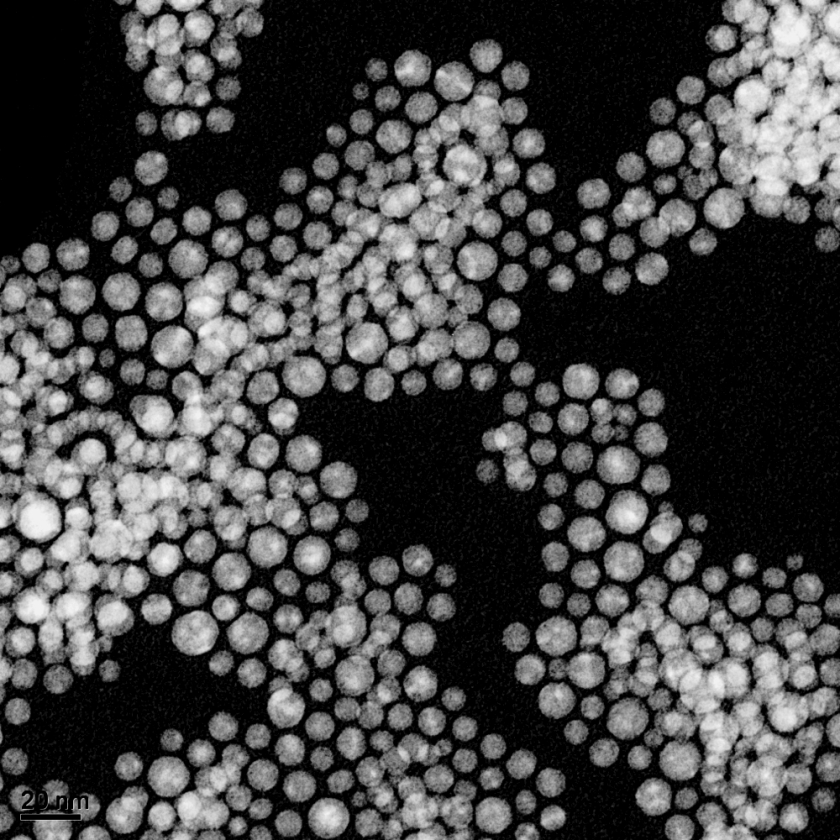
Silver nanoparticles with diameters of ~10 nm deliver the best performance as electrocatalysts. The silver particles are sprayed onto the electrode together with a conductive carbon powder. The ideal mixture consists of 20 per cent by mass silver and 80 per cent by mass carbon powder. This image was taken using a transmission electron microscope (TEM). © HZB Via electrolysis, CO₂ can be reduced to CO, a raw material for further chemical products such as fuels. Within the GreenQuest Project,...
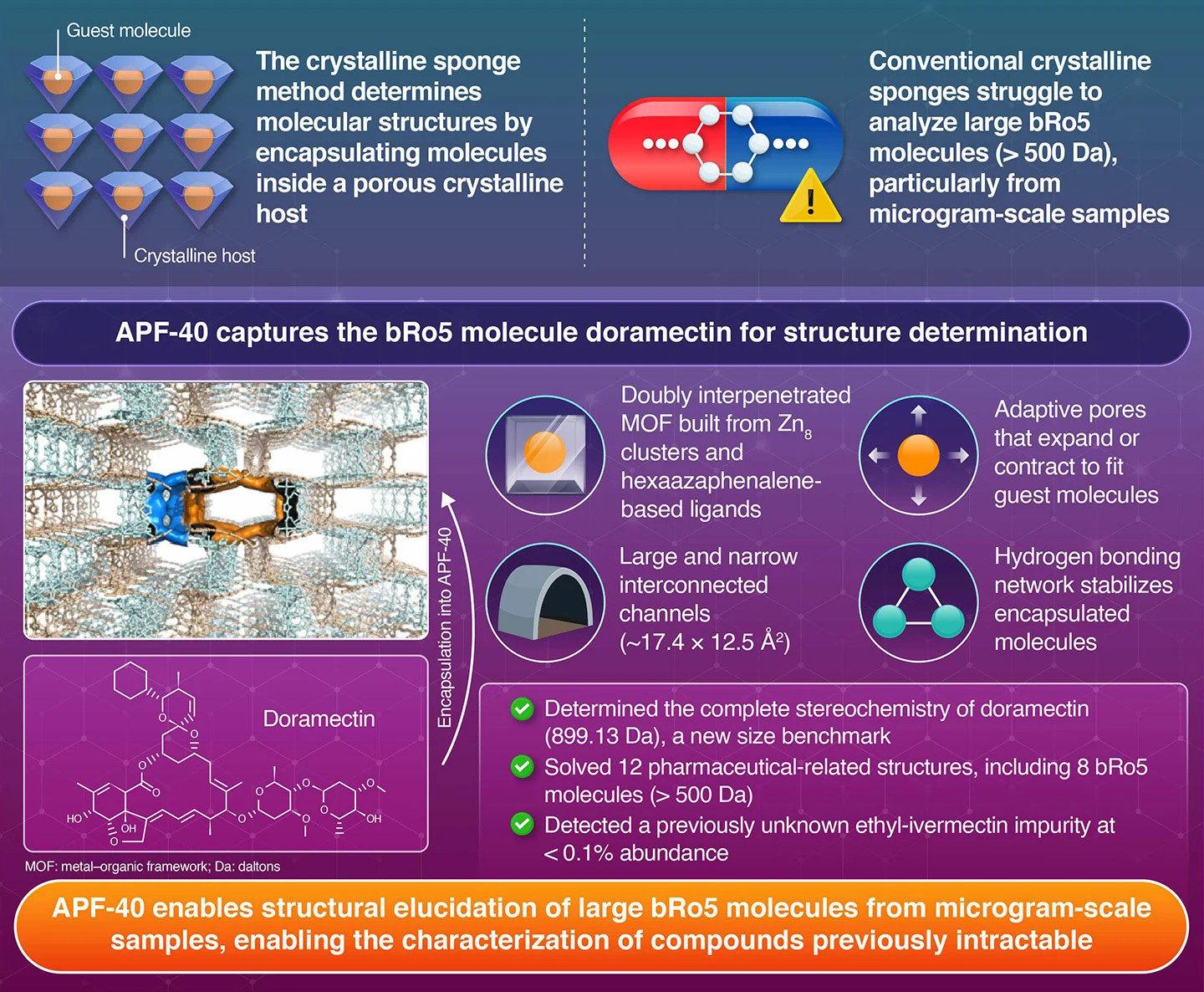
A flexible metal–organic framework developed by researchers from Institute of Science Tokyo enables the structural determination of large "beyond rule of 5" molecules from microgram-scale samples. Using APF-40 as a crystalline sponge, the researchers determined the structures of 12 pharmaceutical-related molecules, including the 899 Da drug molecule doramectin and trace ivermectin derivatives. The method could aid drug discovery, natural products research, and the characterization of rare...
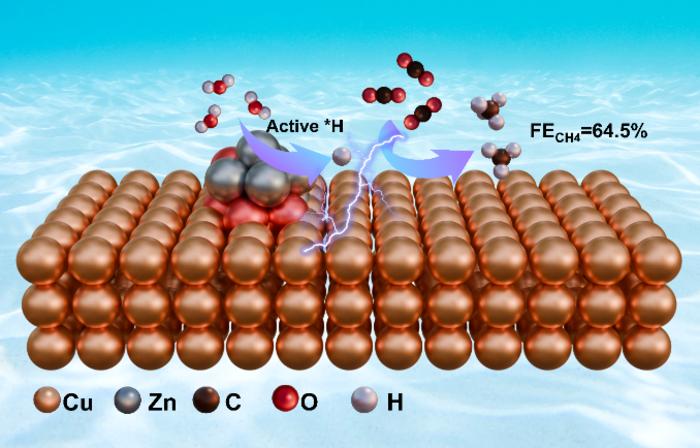
image: CuZn800@C was constructed via solvothermal method and utilizes the high-temperature volatility of zinc to prepare through calcination at different temperatures, which displays a high methane Faradaic efficiency of 64.5% and a remarkable partial current density of -551.3 mA/cm2 at -1.7 V vs. RHE, along with excellent stability. Zn and Cu form a tandem reaction system. Zn sites promote water splitting to provide protons, while Cu sites reduce the energy barrier for *CO hydrogenation....