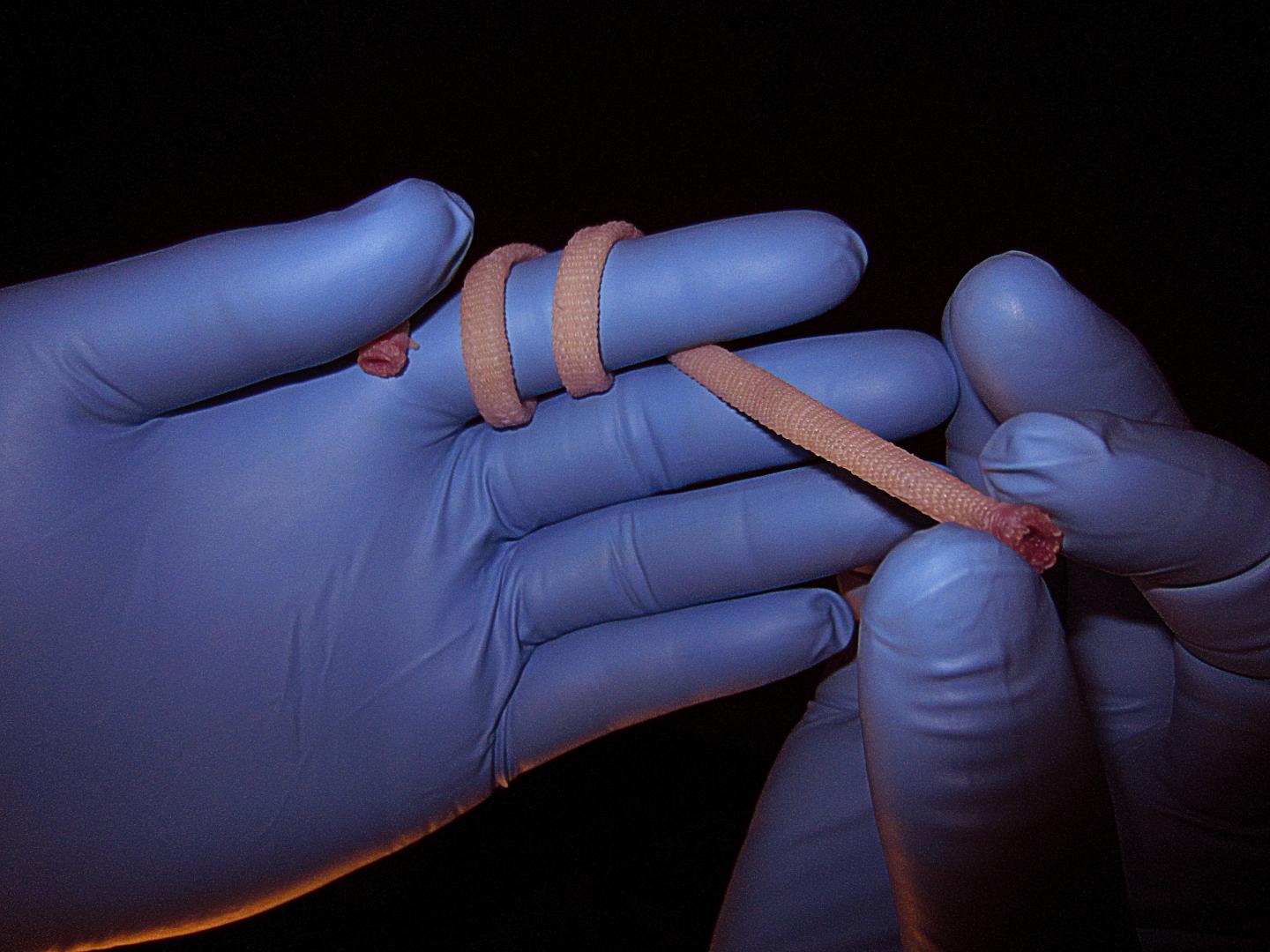
Researchers have used threads made of engineered human tissue to weave blood vessels that could one day help repair diseased or damaged blood vessels.
"Blood vessels are just one example of what can be done with our new textile approach to tissue engineering," said research team leader Nicolas L'Heureux, PhD, director of research at Inserm/University of Bordeaux in France. "It can be used to make practically any shape by weaving, braiding or knitting the threads and allows very good control of the mechanical properties of the final product."
Synthetic blood vessel grafts made of woven synthetic polymer yarn are sometimes used to replace diseased arteries. However, the body recognizes the polymer as foreign, which causes blood to clot on these grafts and creates a scar that can clog the tube. Because blood vessels created with the new textile-based approach don't require any synthetic materials, they are likely to be accepted and become part of the body.
L'Heureux was scheduled to present this research at the American Association for Anatomy annual meeting in San Diego this month. Though the meeting, to be held in conjunction with the 2020 Experimental Biology conference, was canceled in response to the COVID-19 outbreak, the research team's abstract was published in this month's issue of The FASEB Journal.
The threads used for the new textile approach are made of a biomaterial called cell-assembled matrix (CAM) developed by L'Heureux's research team. CAM is mostly collagen, which is the most abundant protein the body and the protein that makes tissues and organs mechanically strong. CAM is well-accepted by the body because it is entirely human and not chemically modified.
In the new study, the researchers show that they can make yarn by cutting CAM sheets into ribbons that can be used directly or twisted into threads. They used these threads to weave blood vessels that displayed excellent mechanical properties without the need for any synthetic scaffolding or chemical treatments.
"It is time consuming and costly to get CAM layers to stick together," said L'Heureux. "The new textile assembly approach is not only more versatile but also has the potential to be automated which would make it even faster, easier and cheaper to use."
Because a collagen scaffold is an integral part of most organs, CAM could be used to jumpstart the regeneration of many tissues and organs. So far it has been used to make lab-grown skin for burn patients and guides that help repair nerve injuries.
The researchers are now building additional blood vessel prototypes and learning more about the best ways to handle CAM threads and ribbons. They will soon start testing the vascular grafts in animals as a step toward eventual clinical trials in people.
Human textiles: A cell-synthesized yarn as a truly “bio” material for tissue engineering applications
Magnan, Laure, Gaëlle Labrunie, Mathilde Fénelon, Nathalie Dusserre, Marie-Pierre Foulc, Mickaël Lafourcade, Isabelle Svahn, Etienne Gontier, Todd N. McAllister, and Nicolas L'Heureux
Acta Biomaterialia (2020); vol. 105, pp. 111-120
DOI: 10.1016/j.actbio.2020.01.037
Contact information:
Nicolas L'Heureux
Director of research at Inserm/University of Bordeaux
nicolas.lheureux@inserm.fr
INSERM - Institut National de la Santé et de la Recherche Médicale
(National Institute for Health and Medical Research)
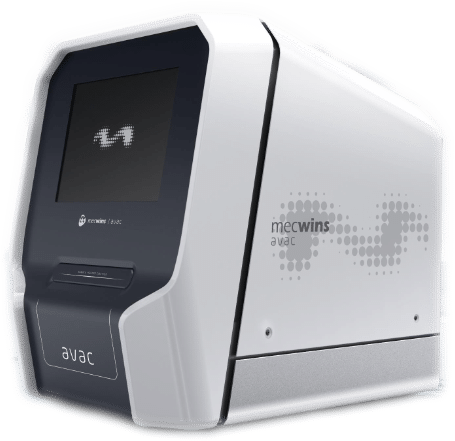
Mecwins has described its AVAC technology, which labels target proteins with plasmonic nanoparticles and counts each one individually by dark-field micro-spectrophotometry. The AVAC Analyzer reaches femtogram-range sensitivity.
Hesperos has received an SBIR Phase II grant (R44AI197758) from NIAID to expand its Malaria-on-a-Chip platform, adding support for viable, replicating parasite strains and predictive PK/PD modeling.
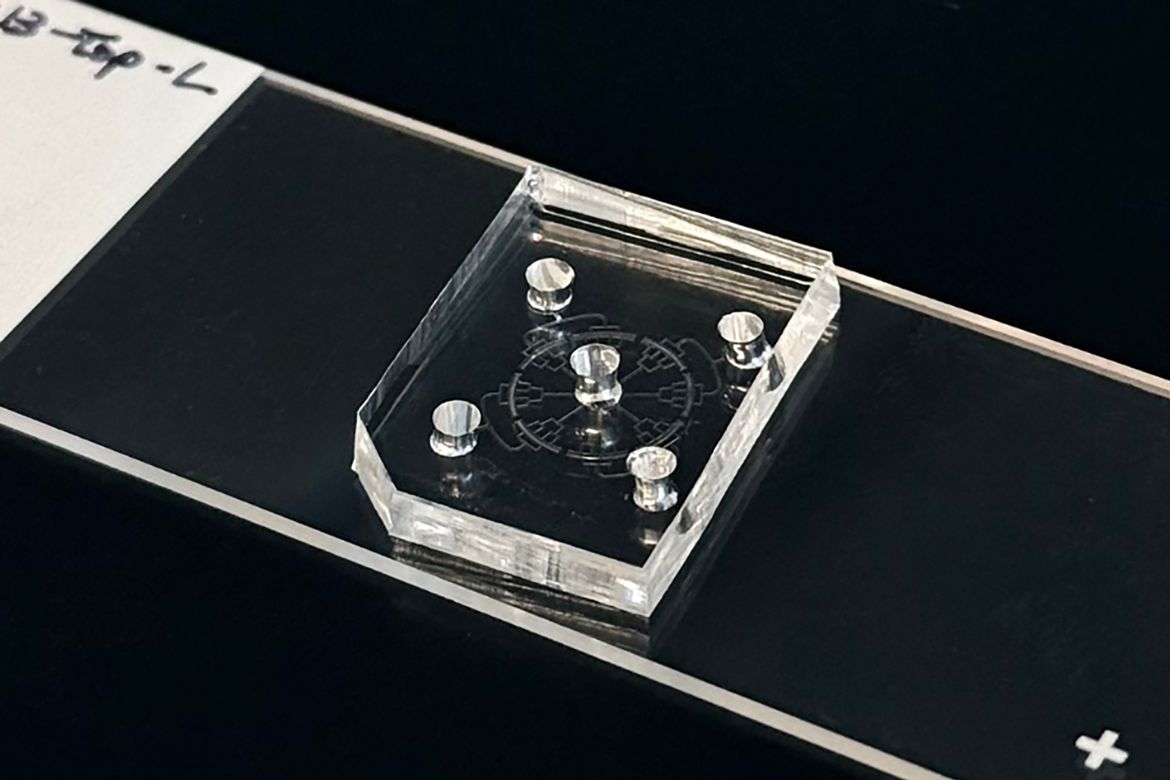
UCLA researchers have shown that briefly squeezing a cell's nucleus for milliseconds can loosen tightly packed DNA and make CRISPR activation far more effective at reprogramming cell identity. After mapping which genomic regions opened, they aimed guide RNAs at those sites, raising the share of mouse skin cells converted to neurons from about 3% to 10%. Adding a priming step that activated Oct4 pushed conversion to roughly 40%.
This week in nanotech
$108.5M raised
7 funding rounds · 39 deals tracked
New products
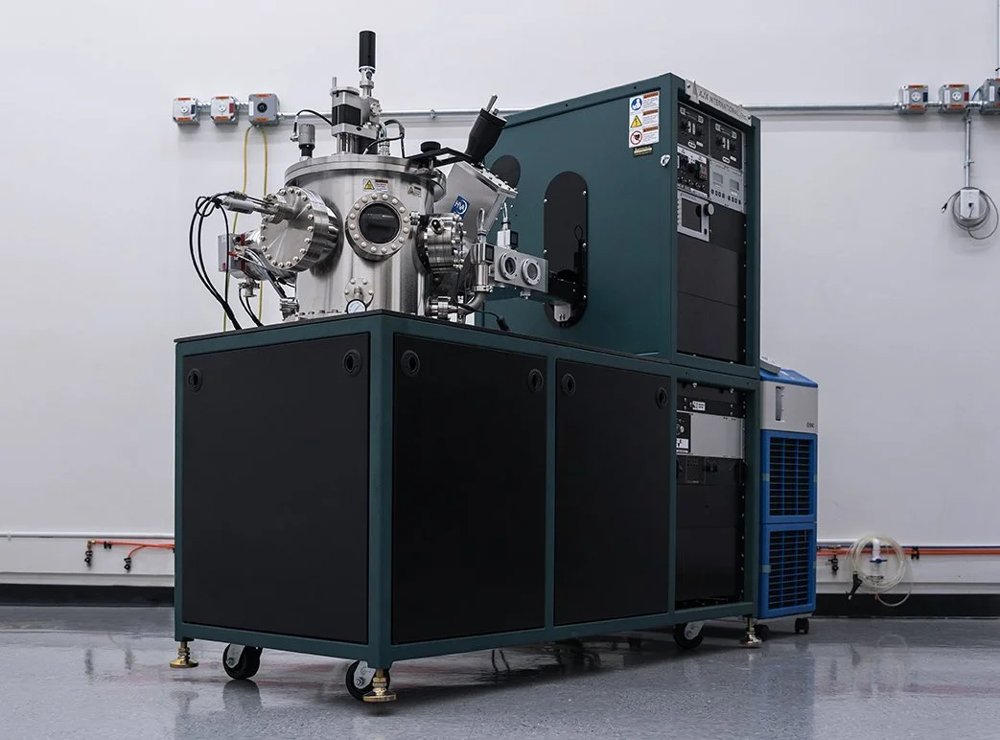 Orion Sputtering Deposition SystemsAJA International Featured
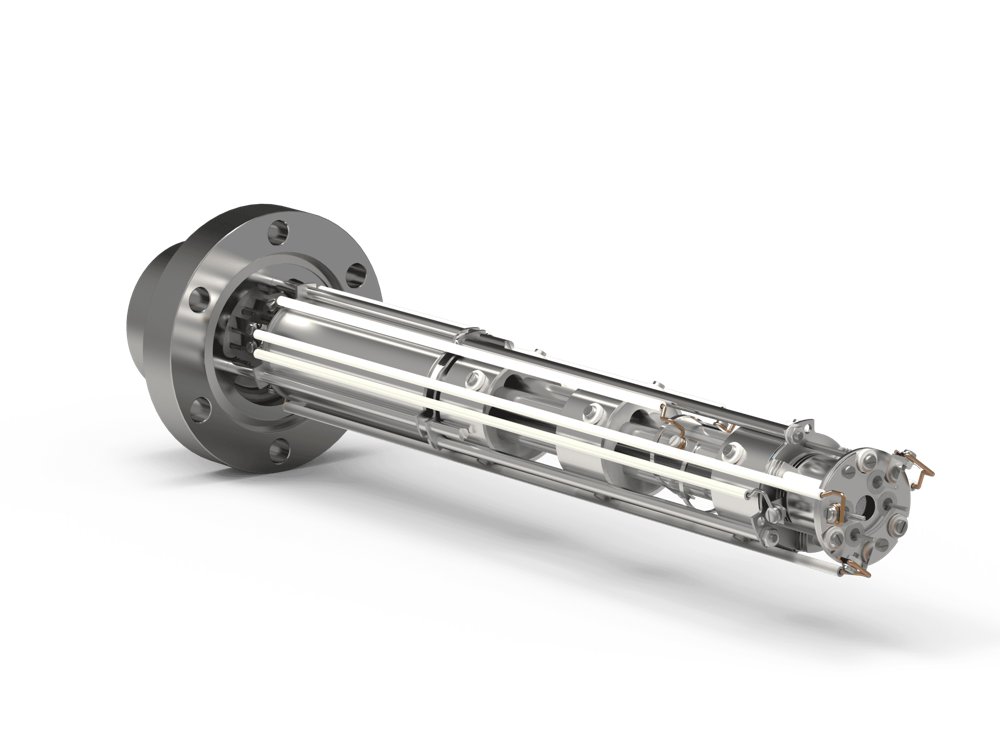 DLS-1 Mass Spectrometer for Fusion Gas AnalysisHiden Analytical Featured
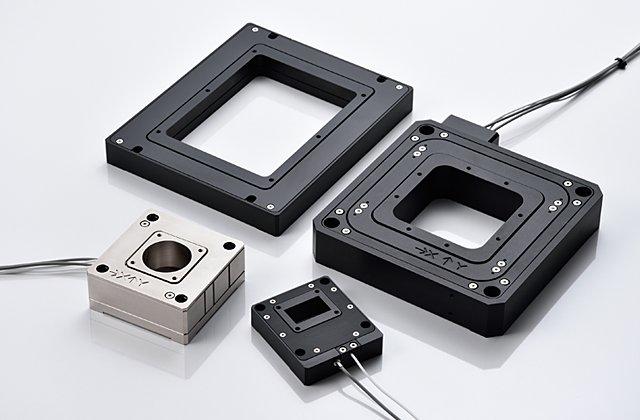 PKVH / PKVL ZAxis With an opening modelTHK PRECISION CO.,LTD.
Market insights
Last 30 days: Quantum Technologies drew the most money: $3.17B.
Money raised per month