University of Warwick
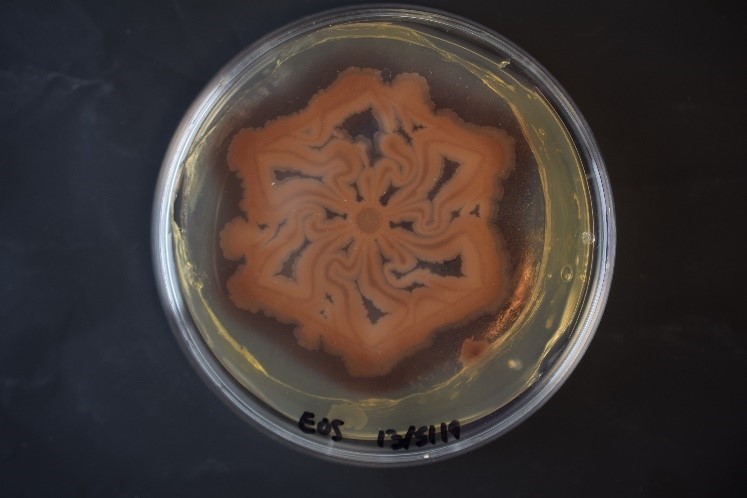
A new method for engineering living materials called ‘MeniFluidics’, made by researchers at the University of Warwick could see a transformation in tissue engineering and bio-art, as well as new ways to research cellular interactions.
Living cells have many properties that non-living materials simply don’t. The ability of controlling the emergent behaviours of cells and organising them into arbitrary patterns is a key step forward towards utilizing living materials, for uses such as organs on a chip. This is why new technologies are being developed to obtain such an ability.
Engineered living materials (ELMs) is a new class of materials that exploit the properties of living organisms. While various techniques such as 3D printers have been utilized for developing ELMs, these techniques are typically limited for static patterns and suffer for technical complications.
Physicists and biologists at the University of Warwick have teamed up to develop a new method for controlling cellular patterns, published in the journal ACS Synthetic Biology, titled 'Pattern engineering of living bacterial colonies using meniscus-driven fluidic channels', their new technique is called MeniFluidics.
Grounded on the physics of meniscus generation, the researchers implemented structures into gel surfaces. Evaporation of water from gel materials lead to formation of open channels which can be used for guiding the direction and speed of cellular expansion.
Dr Vasily Kantsler, from Department of Physics at the University of Warwick comments, “I believe that our catchy named (Menifluidics) technique will enable new opportunities in biophysical and biomedical research and applications such as antibiotic resistance and biofouling”.
Dr Munehiro Asally, from School of Life Science at the University of Warwick adds, “We hope MeniFluidics will be used widely by biophysics, microbiologists, engineers and also artists! As it is a simple and versatile method”.
Pattern engineering of living bacterial colonies using meniscus-driven fluidic channels
Vasily Kantsler, Elena Ontañón-McDonald, Cansu Kuey, Manjari J. Ghanshyam, Maria Chiara Roffin, and Munehiro Asally
ACS Synthetic Biology (2020)
DOI: 10.1021/acssynbio.0c00146
Contact information:
Associate Professor, School of Life Sciences, University of Warwick
M.Asally@warwick.ac.uk
Phone: +44 (0)24-765-72976
Associate Professor, Department of Physics, University of Warwick
V.Kantsler@warwick.ac.uk
Phone : +44 (024) 765 73947
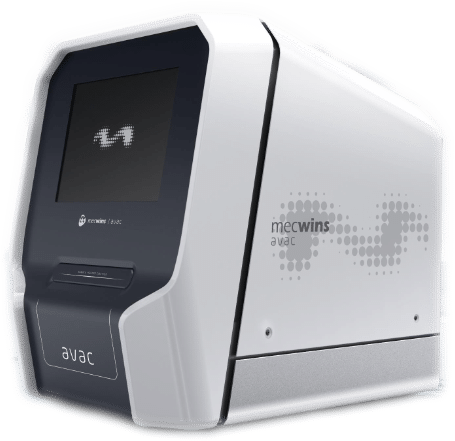
Mecwins has described its AVAC technology, which labels target proteins with plasmonic nanoparticles and counts each one individually by dark-field micro-spectrophotometry. The AVAC Analyzer reaches femtogram-range sensitivity.
Hesperos has received an SBIR Phase II grant (R44AI197758) from NIAID to expand its Malaria-on-a-Chip platform, adding support for viable, replicating parasite strains and predictive PK/PD modeling.
UCLA researchers have shown that briefly squeezing a cell's nucleus for milliseconds can loosen tightly packed DNA and make CRISPR activation far more effective at reprogramming cell identity. After mapping which genomic regions opened, they aimed guide RNAs at those sites, raising the share of mouse skin cells converted to neurons from about 3% to 10%. Adding a priming step that activated Oct4 pushed conversion to roughly 40%.
This week in nanotech
$108.5M raised
7 funding rounds · 39 deals tracked
New products
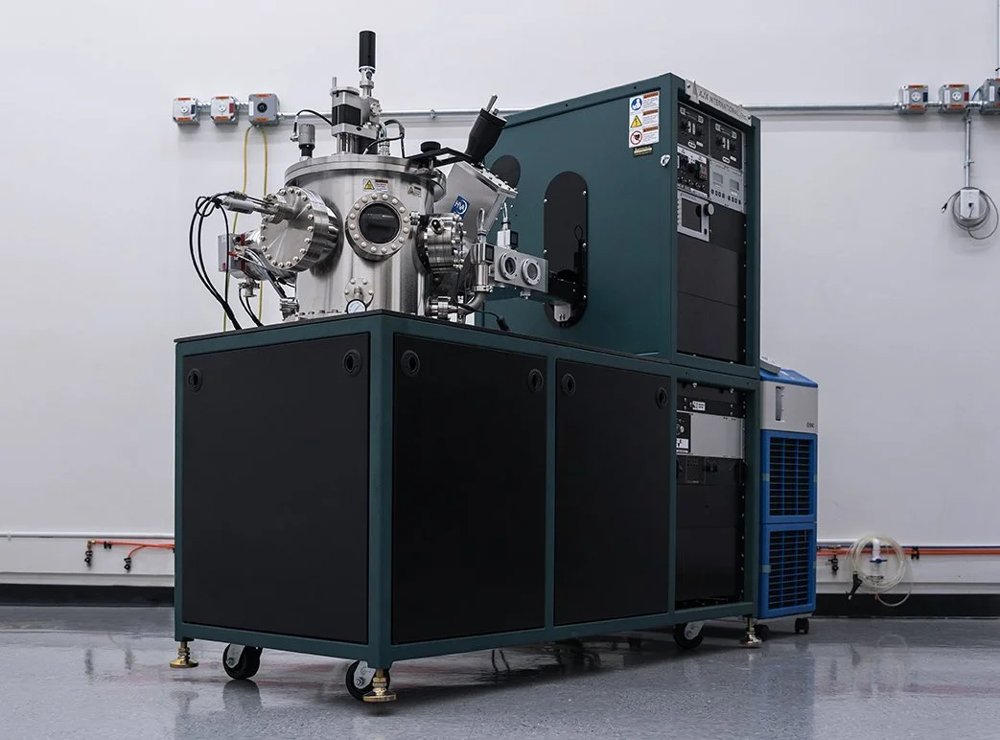 Orion Sputtering Deposition SystemsAJA International Featured
 Ti-WCMBN Nanomaterialia Featured
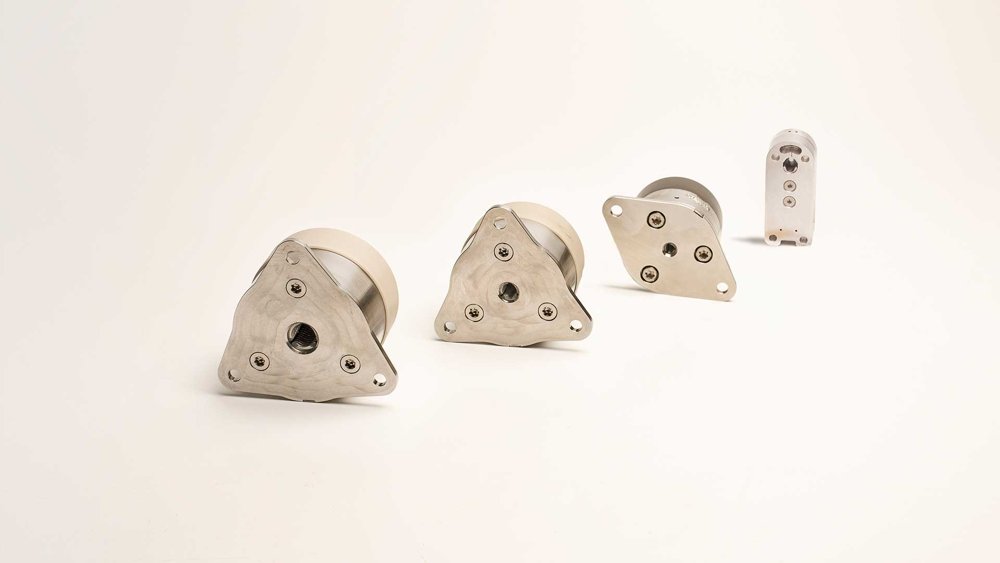 Hold Down & Release Mechanisms (HDRM) REACT – 5KN, 15KN and 35KN space qualified resettable mechanismsARQUIMEA
Market insights
Last 30 days: Quantum Technologies drew the most money: $3.17B.
Money raised per month
Behind the deal
Who invested in Vertical Semiconductor’s $73M Grant?
See the investors with Insights Pro →