St Petersburg University
In every modern microcircuit hidden inside a laptop or smartphone, you can see transistors - small semiconductor devices that control the flow of electric current, i.e. the flow of electrons. If we replace electrons with photons (elementary particles of light), then scientists will have the prospect of creating new computing systems that can process massive information flows at a speed close to the speed of light. At present, it is photons that are considered the best for transmitting information in quantum computers. These are still hypothetical computers that live according to the laws of the quantum world and are able to solve some problems more efficiently than the most powerful supercomputers.
Although there are no fundamental limits for creating quantum computers, scientists still have not chosen what material platform will be the most convenient and effective for implementing the idea of a quantum computer. Superconducting circuits, cold atoms, ions, defects in diamond and other systems now compete for being one chosen for the future quantum computer. It has become possible to put forward the semiconductor platform and two-dimensional crystals, specifically, thanks to scientists from: the University of Würzburg (Germany); the University of Southampton (United Kingdom); the University of Grenoble Alpes (France); the University of Arizona (USA); the Westlake university (China), the Ioffe Physical Technical Institute of the Russian Academy of Sciences; and St Petersburg University.
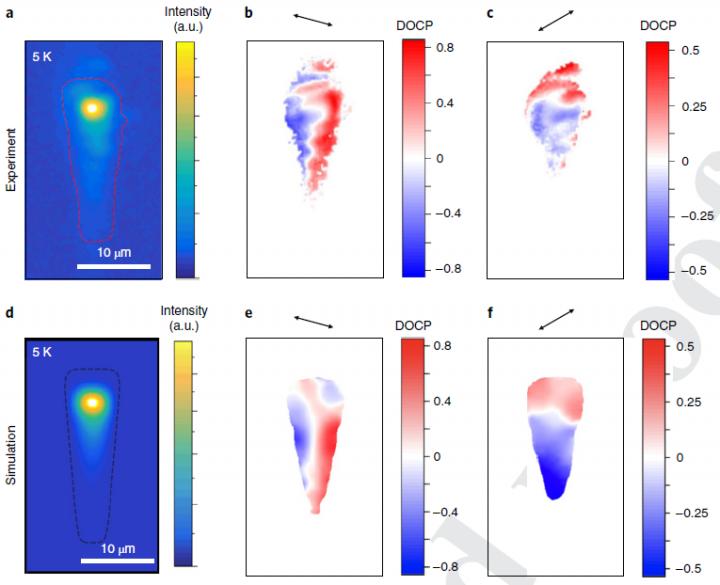
The physicists studied the propagation of light in a two-dimensional crystal layer of molybdenum diselenide (MoSe2) which is only one atom thick - this is the thinnest semiconductor crystal in the world. The researchers found that the polarisation of light propagating in a superfine crystalline layer depends on the direction of light propagation. This phenomenon is due to the effects of spin-orbit interaction in the crystal. Interestingly, as the scientists noted, the graph that shows the spatial distribution of the polarisation of light turned out to be rather unusual - it resembles a multi-coloured marine rapana.
Ultrafine molybdenum diselenide crystals for experiments were synthesised in the laboratory of Professor Sven Höfling at the University of Würzburg. It is one of the best crystal growth laboratories in Europe. Measurements were carried out both in Würzburg and in St Petersburg under the supervision of Alexey Kavokin, professor at St Petersburg University. An important role in the development of the theoretical base was made by Mikhail Glazov. He is a corresponding member of the Russian Academy of Sciences, an employee of the Spin Optics Laboratory at St Petersburg University, and a leading research associate at the Ioffe Physical Technical Institute.
'I foresee that in the near future, two-dimensional monoatomic crystals will be used to transfer information in quantum devices,' said Professor Alexey Kavokin, head of the Spin Optics Laboratory at St Petersburg University. 'What classic computers and supercomputers take a very long time to do, a quantum computing device will do very quickly. Therein lies the great danger of quantum technologies - comparable to the danger of an atomic bomb. With their help it will be possible, for example, to hack banking protection systems very quickly. That is why today intensive work is under way, including the creation of means of protecting quantum devices: quantum cryptography. And our work contributes to semiconductor quantum technologies.'
Additionally, as the scientist noted, the research was a major step forward in the study of light-induced (i.e. appearing in the presence of light) superconductivity. It is the phenomenon when the materials that allow electric current to pass through have zero resistance. At present, this state cannot be achieved at temperatures above minus 70 C. However, if the proper material is found, this discovery will make it possible to transfer electricity to any point on Earth without any loss, and to create a new generation of electric motors. It should be recalled that in March 2018, the research team of Alexey Kavokin predicted that structures containing superconducting metals, such as aluminium, can help solve the problem. Nowadays, scientists at St Petersburg University are looking for a way to obtain experimental evidence of their theory.
Optical valley Hall effect for highly valley-coherent exciton-polaritons in an atomically thin semiconductor
Nils Lundt, Łukasz Dusanowski, Evgeny Sedov, Petr Stepanov, Mikhail M. Glazov, Sebastian Klembt, Martin Klaas, Johannes Beierlein, Ying Qin, Sefaattin Tongay, Maxime Richard, Alexey V. Kavokin, Sven Höfling & Christian Schneider
Nature Nanotechnology (2019)
DOI: 10.1038/s41565-019-0492-0
Contact information:
Professor Alexey Kavokin
A.Kavokin@soton.ac.uk
Head of Spin Optics Laboratory (SOLAB) at St Petersburg University
Chair of Nanophysics and Photonics at the University of Southampton
Group leader of Quantum Polaritonics Group at Russian Quantum Center (RQC)
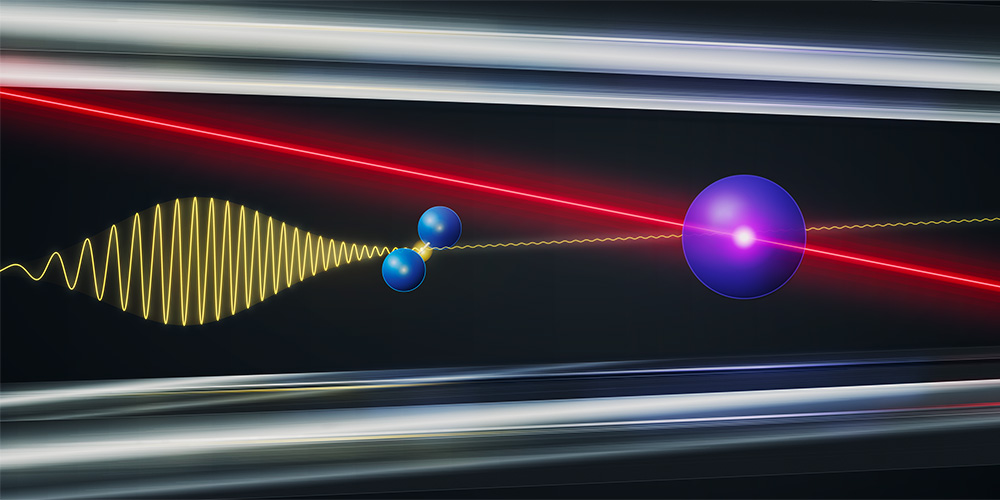
Researchers at the University of Basel have identified and coherently controlled so called forbidden vibrational transitions in individual trapped nitrogen molecular ions without destroying them. Using quantum logic spectroscopy, a single calcium ion served as messenger, letting the team probe the molecule repeatedly and determine its fundamental vibrational frequency ten times more precisely than before.
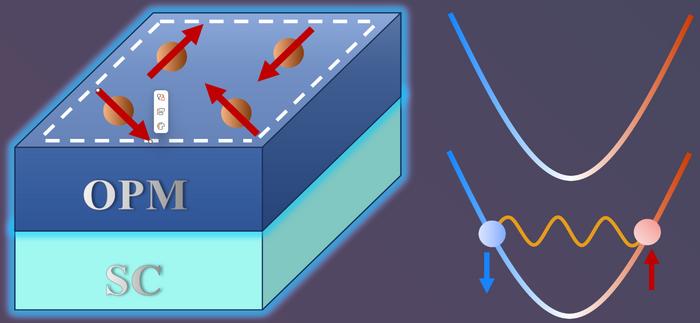
Odd-parity magnets host an intrinsic hidden Zeeman field that lifts Kramers degeneracy without any applied field, researchers report. Using an f-wave magnet model on a triangular lattice, the team shows how non-relativistic spin splitting and this hidden field combine to stabilize s-wave superconductivity far beyond the Pauli limit.
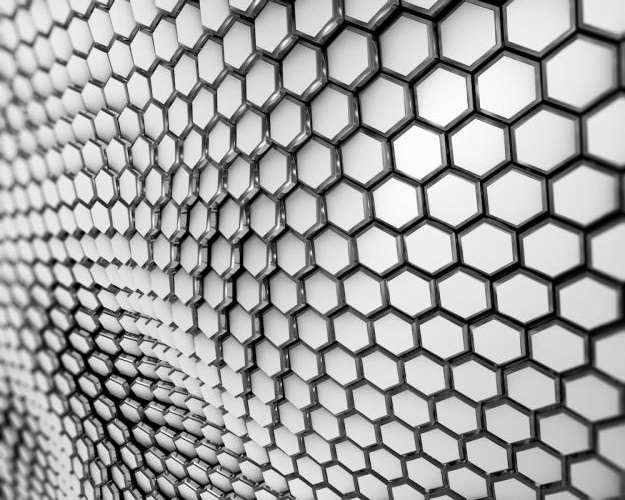
Rhombohedral hexalayer graphene, in which six carbon sheets are stacked with a slight lateral offset like staircase steps, hosts both superconductivity and electrically controllable orbital magnetism, researchers report in Nature Physics. The arrangement yields a rich collection of quantum states in a simple carbon-based material, positioning rhombohedral multilayer graphene as a platform for probing the fundamental mechanisms of superconductivity and magnetism and potentially for new ways of…
This week in nanotech
10 deals tracked
New products
 Nion-compatible In Situ STEM Holders for Electrical BiasingHummingbird Scientific Featured
 DLS-1 Mass Spectrometer for Fusion Gas AnalysisHiden Analytical Featured
 GHK-CuPeoples Peps
Market insights
Last 30 days: Semiconductors & Electronics was the busiest vertical: 43 of 141 events (30%).
Money raised per month