Today, a multitude of industries, including optics, electronics, water purification, and drug delivery, innovate at an unprecedented scale with nanometer-wide rolls of honeycomb-shaped graphite sheets called carbon nanotubes (CNTs). Features such as light weight, convenient structure, immense mechanical strength, superior thermal and electrical conductivities, and stability put CNTs a notch above other material alternatives. However, to supply their rising industrial demand, their production must be constantly scaled up, and therein lies the main challenge to using CNTs.
While scientists have been able to grow individual CNTs approximately 50 cm in length, when they attempt arrays, or forests, they hit a ceiling at around 2 cm. This is because the catalyst, which is key to CNT growth occurring, deactivates and/or runs out before CNTs in a forest can grow any longer, driving up monetary and raw-material costs of CNT production and threatening to cap its industrial use.
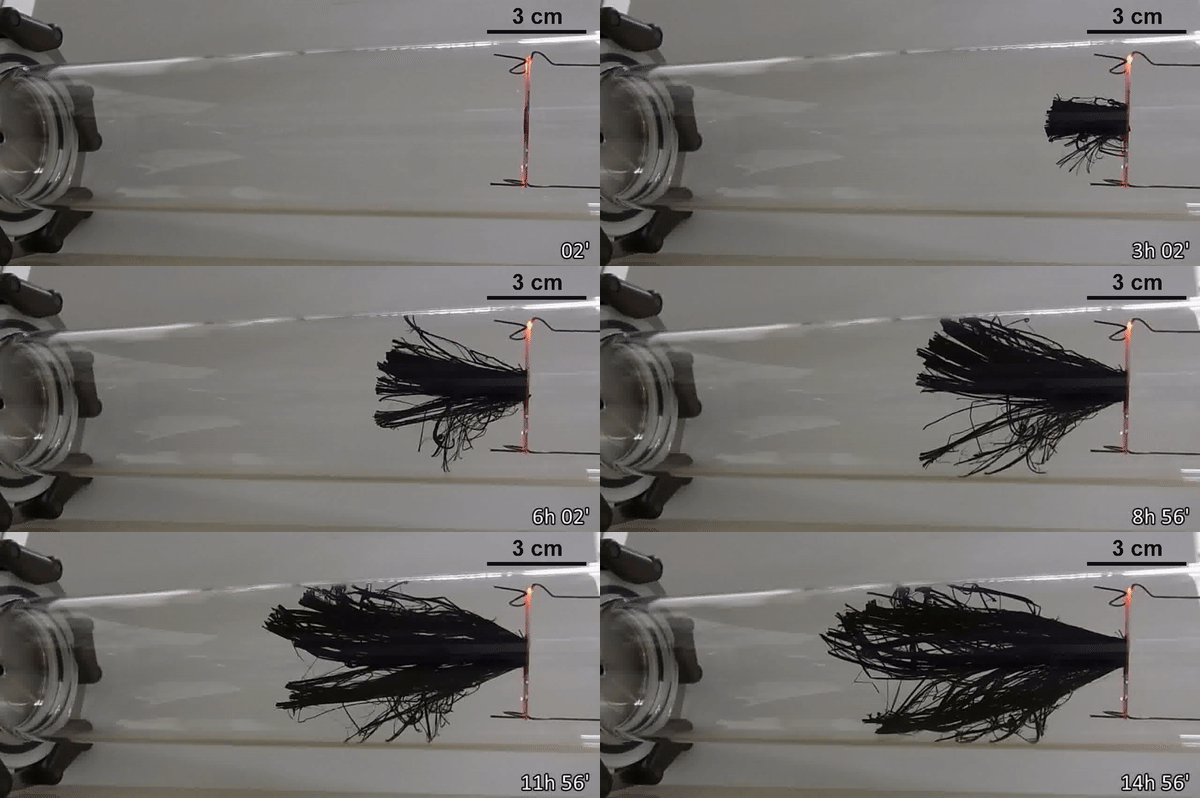
Now, a ceiling-breaking strategy has been devised by a team of scientists from Japan. In their study published in Carbon, the team presents a novel approach to a conventional technique that yields CNT forests of record length: ~14 cm--7 times greater than the previous maximum. Hisashi Sugime, Assistant Professor at Waseda University, who led the team, explains, "In the conventional technique, the CNTs stop growing due to a gradual structural change in the catalyst, so we focused on developing a new technique that suppresses this structural change and allows the CNTs to grow for a longer period."
The team created a catalyst based on their findings in a previous study to begin with. They added a gadolinium (Gd) layer to the conventional iron-aluminum oxide (Fe/Al2Ox) catalyst coated onto a silicon (Si) substrate. This Gd layer prevented the deterioration of the catalyst to a certain extent, allowing the forest to grow up to around 5 cm in length.
To further prevent catalyst deterioration, the team placed the catalyst in their original chamber called the cold-gas chemical vapor deposition (CVD) chamber. There, they heated it to 750°C and supplied it with small concentrations (parts-per-million) of room temperature Fe and Al vapors.
This kept the catalyst going strong for 26 hours, in which time a dense CNT forest could grow to 14 cm. Various analyses to characterize the grown CNTs showed that they were of high purity and competitive strength.
This achievement not only overcomes hurdles to the widespread industrial application of CNTs but it opens doors in nanoscience research. "This simple but novel method that drastically prolongs catalyst lifetime by supplying ppm-level vapor sources is insightful for catalyst engineering in other fields such as petrochemistry and nanomaterial crystal growth," Sugime says. "The knowledge herein could be pivotal to making nanomaterials a ubiquitous reality."
Contact
Hisashi Sugime
School of Advanced Science and Engineering
Waseda University
sugime@aoni.waseda.jp
Video
Although carbon nanotube forests are hard to grow very long via conventional methods, a little tweak in technique can change things dramatically. (Video/photo credit: Hisashi Sugime, Waseda University)
Reference
Ultra-long carbon nanotube forest via in situ supplements of iron and aluminum vapor sources
Hisashi Sugime, Toshihiro Sato, Rei Nakagawa, Tatsuhiro Hayashi, Yoku Inoue, Suguru Noda

certain wavelength and direction will also emit heat in the same ways. This fundamental relationship, known as reciprocity, limits our ability to independently control heat absorption and heat emission. But if absorption and emission could be separated, engineers could design devices that absorb heat from one direction while emitting it in another. By ‘steering’ thermal energy, they could create more efficient thermal management, energy conversion, infrared sensing, and thermal communicati...
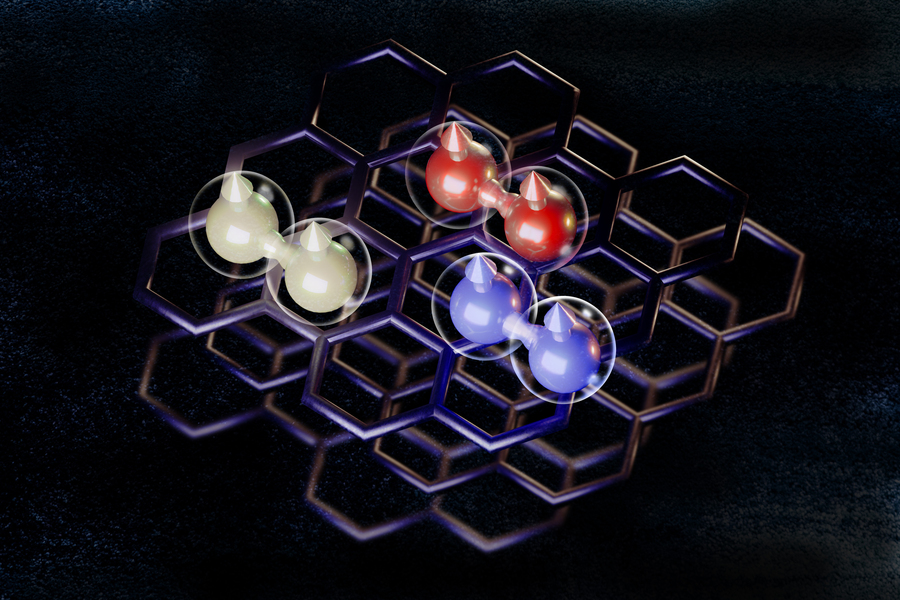
MIT researchers have found that rhombohedral graphene — a naturally occurring staircase-like stack of four or five atomically thin carbon layers found in ordinary graphite — can host multiple distinct superconducting states simultaneously, a rarity among known superconductors. Publishing in Nature, the team reports that three of these states not only survive exposure to magnetic fields up to around 9 tesla (roughly 180,000 times Earth's magnetic field), which would normally destroy supercondu...

MIT researchers have developed a new approach that dramatically improves the modeling of chemically disordered metal alloys, a long-standing challenge in materials science. Traditional simulation techniques struggle with the complex atomic arrangements in real-world alloys. The team addressed this by creating smarter training datasets for machine-learning models that better capture the diverse local chemical environments in disordered materials. Using information theory to generate more repre...
This week in nanotech
$281.1M raised
6 funding rounds · 36 deals tracked
New products
 Ti-WCMBN Nanomaterialia Featured
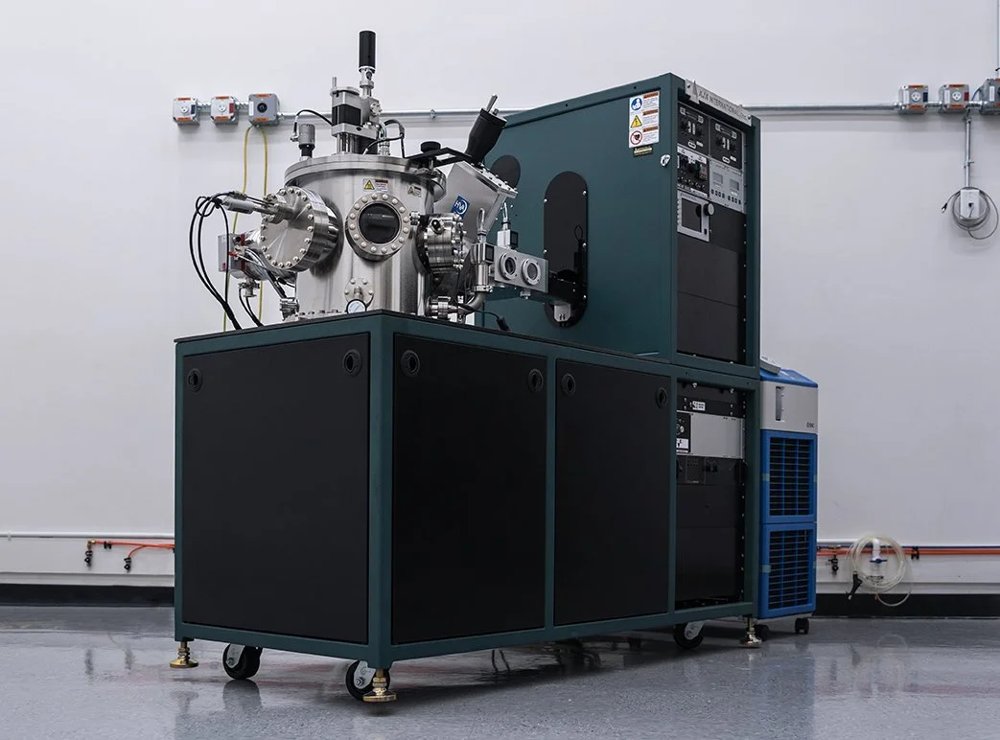 Orion Sputtering Deposition SystemsAJA International Featured
 NanoFlow® S1-20Levidian
Market insights
Last 30 days: Quantum Technologies drew the most money: $3.17B.
Money raised per month