
Researchers at the Niels Bohr Institute, University of Copenhagen, steered very thin conductors from superconductivity to insulation – creating an “impossible”, strange state between the two mutually exclusive states.
Materials research is one of the key disciplines when dealing with quantum mechanics
Materials research is absolutely crucial when dealing with quantum states. Whatever material is used as the basis for creating controllable quantum states, like if you want to build applications using quantum states for computing, sensing, or communication, the materials often define to which extent you can eliminate the ever-present noise that disturbs or even disrupts the desired “clean” quantum states or signals. It is an ongoing battle.
The team led by Saulius Vaitiekenas, Associate Professor at the Niels Bohr Institute, has succeeded in creating what is supposed to be an impossible intermediate state between superconductor = absolutely no resistance or loss of electrical connection - and total insulation = complete shut-off of the electrical signal.
Cross-talk switchboard made the unexpected behavior possible
The group built a "switchboard" with tiny superconducting islands equipped with a voltage-knob – a bit like a transistor - that allowed them to control the cross-talk between these islands. According to an old prediction, the system was expected to go from superconducting, when the islands are allowed to “talk” to each other, straight to insulating, when they're disconnected.
Instead, the researchers found an intermediate state, where the islands continue talking to each other, but without superconductivity. Because of this unexpected behavior, the state is called an anomalous metallic regime.
“Our study sheds more light on this state, indicating that it’s quantum fluctuations or, to be a little more precise, the uncertainty between the superconducting phase between the islands and the number of particles in the islands within our sample, that gives rise to this behavior”, says Saulius (Please check the illustration for reference)
Quantum phase transitions – and understanding them – is one of the pieces in a big puzzle
experiment sheds light on the long-standing question about the anomalous metal—an unexpected state of matter that was observed when the devices were tuned from being a superconductor (perfect conductor) to an insulator. As Saulius explains, “Understanding such quantum phase transitions is like solving a big puzzle.
One piece at a time might not reveal the whole picture, but, in the long run, it might be a step toward electronics that waste less energy and quantum devices that are more controllable and reliable for future applications.”
Reference
Voltage-Tuned Anomalous-Metal to Metal Transition in Hybrid Josephson Junction Arrays
S. Sasmal, M. Efthymiou-Tsironi, G. Nagda, E. Fugl, L. L. Olsen, F. Krizek, C. M. Marcus, and S. Vaitiekėnas
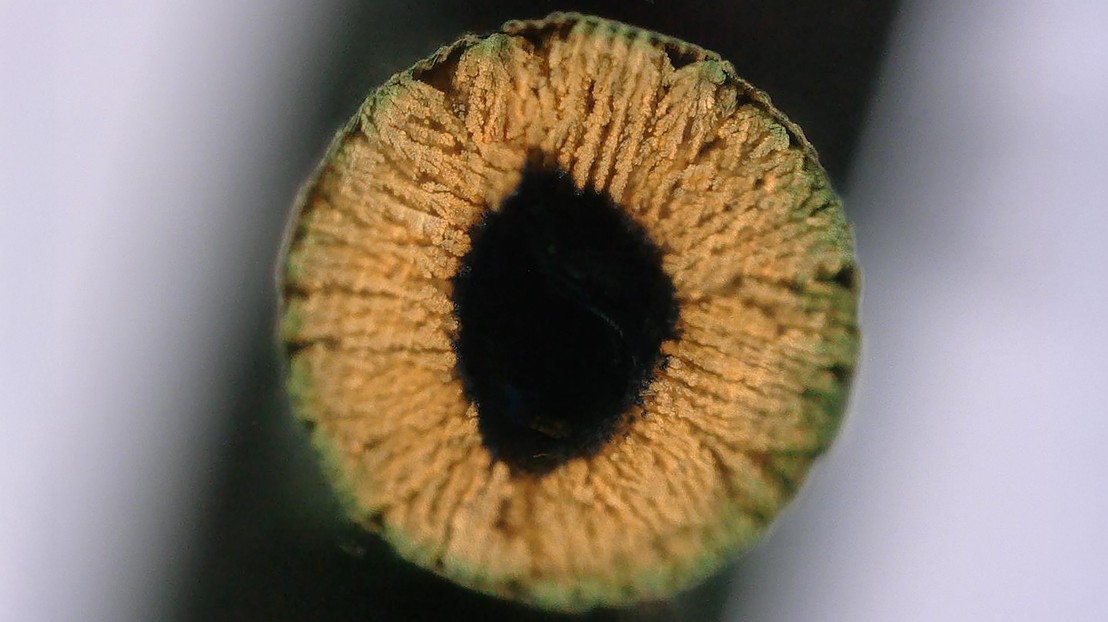
EPFL researchers have pioneered a 3D printing method that grows metals and ceramics inside a water-based gel, resulting in exceptionally dense, yet intricate constructions for next-generation energy, biomedical, and sensing technologies.

For decades, it’s been known that subtle chemical patterns exist in metal alloys, but researchers thought they were too minor to matter — or that they got erased during manufacturing. However, recent studies have shown that in laboratory settings, these patterns can change a metal’s properties, including its mechanical strength, durability, heat capacity, radiation tolerance, and more. Now, researchers at MIT have found that these chemical patterns also exist in conventionally manufactured me...
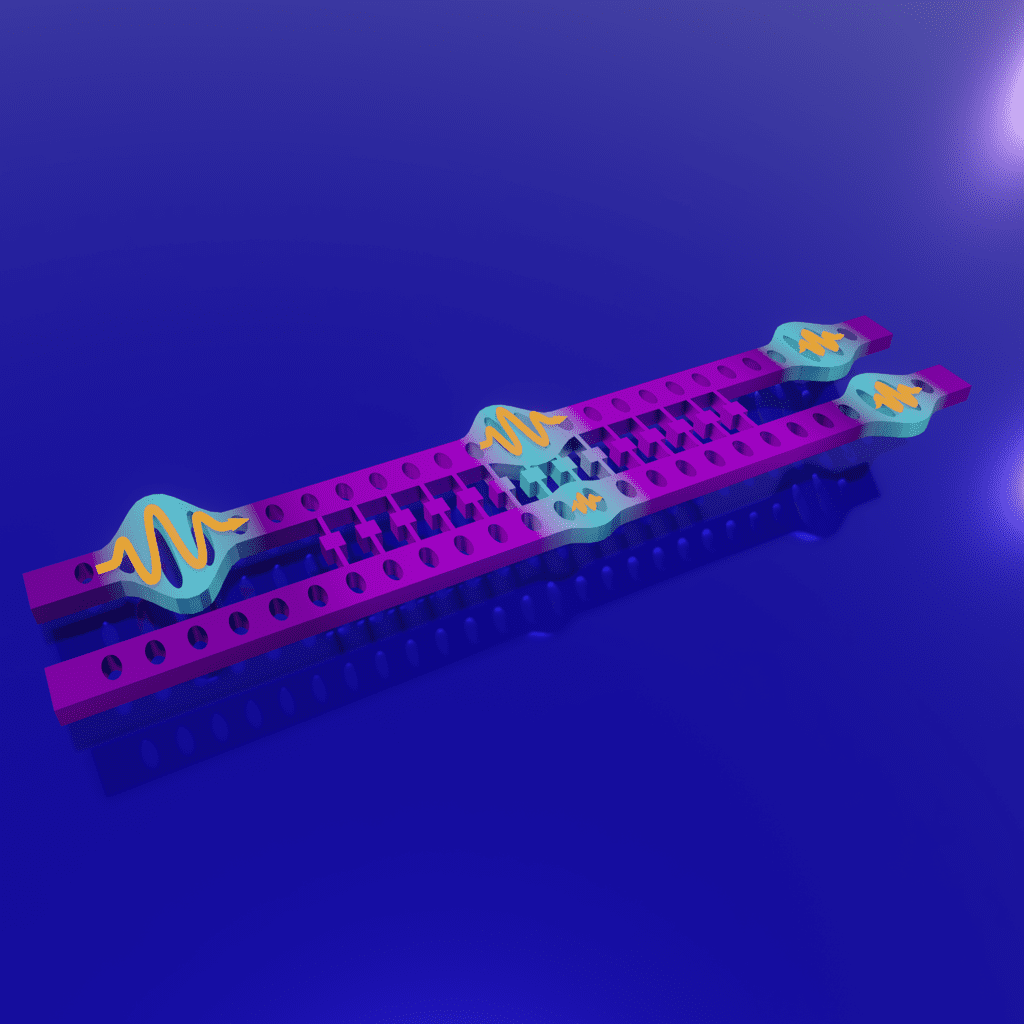
Although quantum technology holds great promise for enabling faster computing, more secure communication and new types of sensing, different quantum systems often don’t interact well with each other. To address this, engineers have developed platforms based on a type of phonon known as a surface acoustic wave. However, the limited propagation distance due to high loss and inherently open 2D structure of existing solutions make such devices relatively large, posing a barrier to their practical...
This week in nanotech
$18.9M raised
4 funding rounds · 37 deals tracked
New products
 Ti-WCMBN Nanomaterialia Featured
 Orion Sputtering Deposition SystemsAJA International Featured
 Ionic® Purification SystemBionano Genomics, Inc.
Market insights
Last 30 days: Semiconductors & Electronics drew the most money: $547.7M.
Money raised per month