Laser field can not only carry spin angular momentum (SAM) but also orbital angular momentum (OAM). The latter usually leads to a vortex beam profile, which is accomplished using the Laguerre-Gaussian mode. Generation of OAM field has been verified for low energy photons at ~m featured wavelength. However, for high energy photons, for example, gamma-rays, traditional optical method becomes invalid.
Recently, researchers at Shanghai Institute of Optics and Fine Mechanics, Chinese Academy of Sciences, have revealed a new method to produce multi-MeV γ-Ray beams carrying significant OAM via ultra-intense laser-driven micro-structured target. Their results were published in Scientific Reports.
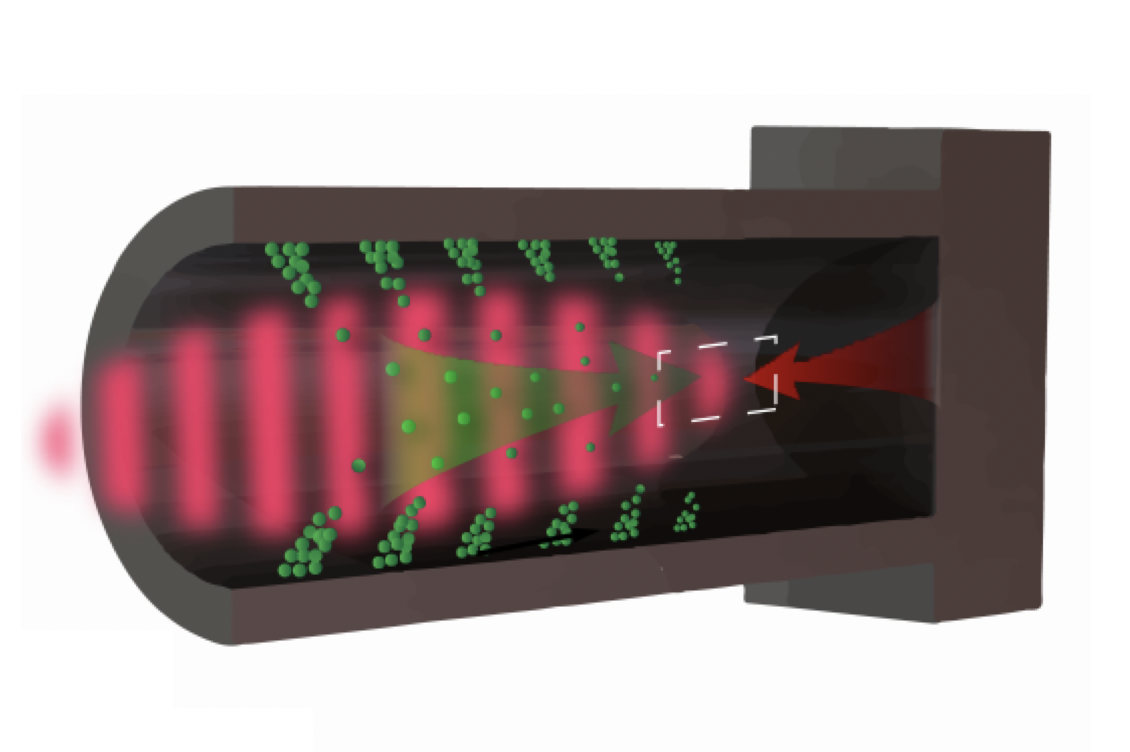
Specifically, they showed in simulations that, when a PW-class circularly polarized (CP) laser irradiated a micro-channel plasma (MCP) target, electrons on the surface of channel would be extracted into the laser field and accelerated via direct laser acceleration. While co-propagating with the driving laser, electron phase in the laser field would be delayed due to its lesser velocity as compared to the speed of light. The electric field orientation of the CP laser pulse was therefore varied from the one at an earlier moment.
This change led to azimuthal momentum around the axis and electrons gain OAM. When the laser pulse approached the flat foil on the rear side of the channel, these electron bunches collided with the laser pulse reflected from the substrate and simultaneously triggered the inverse Compton scattering (ICS) process, resulting in high energy γ-photon emission with OAM.
Further study revealed that the photon OAM came from the ISC process. The researchers removed the reflecting foil and let another co-rotating or counter-rotating laser collide with the electrons. They found that about half of the OAM for the gamma photons came from the electrons and half from the scattering laser.
Previous methods of generating OAM gamma-photons rely on ultra-relativistic CP Laguerre-Gaussian lasers, which are still out of reach for today’s technology. By using an ordinary CP laser and the unique MCP target, this new approach is readily accessible to most laser facilities. These results may guide future experiments in laser-driven novel gamma-ray sources for nuclear physics.
The emission of γ-Ray beams with orbital angular momentum in laser-driven micro-channel plasma target
B. Feng, C. Y. Qin, X. S. Geng, Q. Yu, W. Q. Wang, Y. T. Wu, X. Yan, L. L. Ji & B. F. Shen
Scientific Reports volume 9, Article number: 18780 (2019)
DOI: 10.1038/s41598-019-55217-4
Contact information:
CAO Yong
Shanghai Institute of Optics and Fine Mechanics
caoyong@siom.ac.cn
Chinese Academy of Sciences
Learn more about the Nanotechnology World Association (NWA):
Who we are | Founding Members | Board of Directors | Memberships |
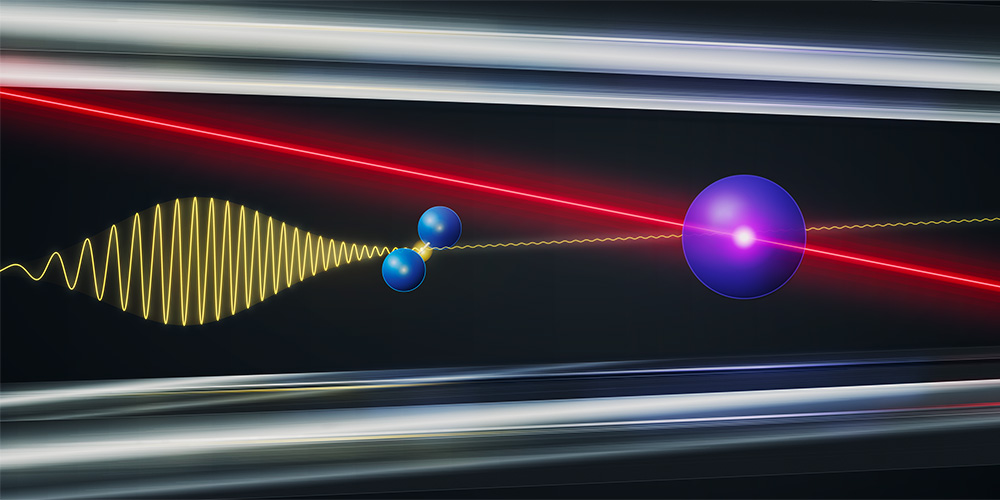
Researchers at the University of Basel have identified and coherently controlled so called forbidden vibrational transitions in individual trapped nitrogen molecular ions without destroying them. Using quantum logic spectroscopy, a single calcium ion served as messenger, letting the team probe the molecule repeatedly and determine its fundamental vibrational frequency ten times more precisely than before.
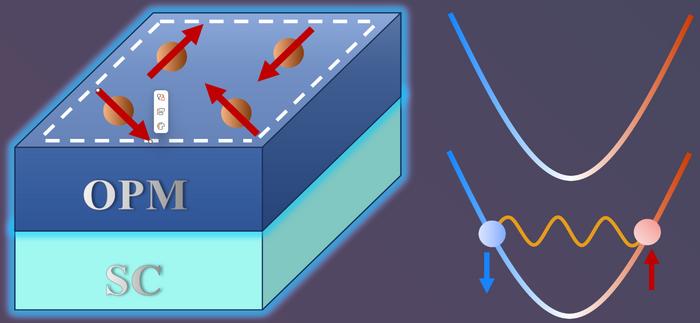
Odd-parity magnets host an intrinsic hidden Zeeman field that lifts Kramers degeneracy without any applied field, researchers report. Using an f-wave magnet model on a triangular lattice, the team shows how non-relativistic spin splitting and this hidden field combine to stabilize s-wave superconductivity far beyond the Pauli limit.
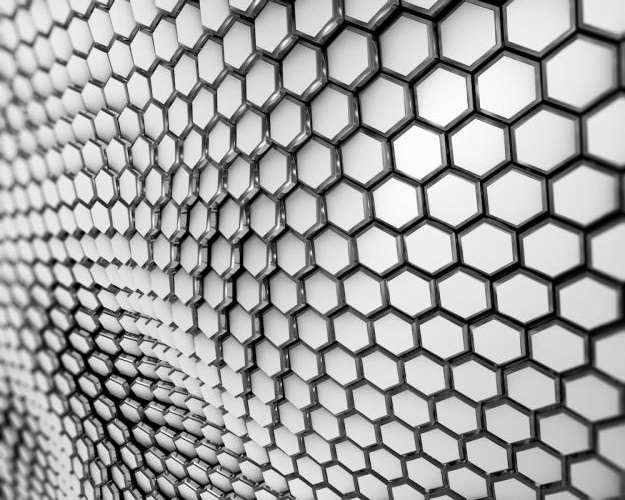
Rhombohedral hexalayer graphene, in which six carbon sheets are stacked with a slight lateral offset like staircase steps, hosts both superconductivity and electrically controllable orbital magnetism, researchers report in Nature Physics. The arrangement yields a rich collection of quantum states in a simple carbon-based material, positioning rhombohedral multilayer graphene as a platform for probing the fundamental mechanisms of superconductivity and magnetism and potentially for new ways of…
This week in nanotech
9 deals tracked
New products
 Nion-compatible In Situ STEM Holders for Electrical BiasingHummingbird Scientific Featured
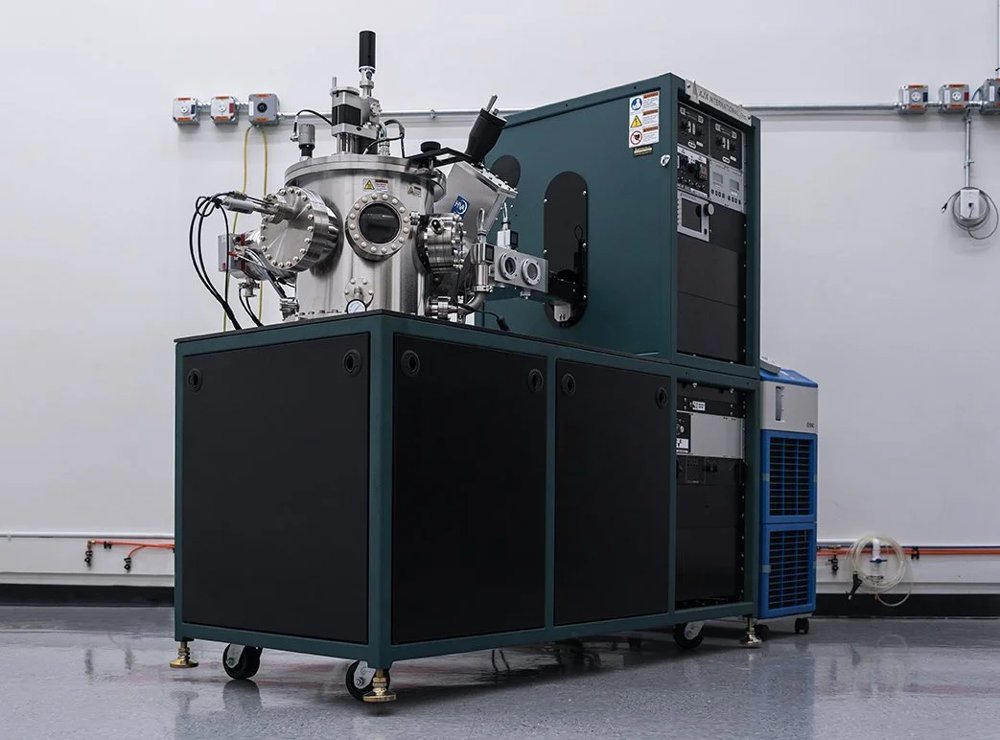 Orion Sputtering Deposition SystemsAJA International Featured
 NanoFlow® S1-20Levidian
Market insights
Last 30 days: Semiconductors & Electronics was the busiest vertical: 39 of 130 events (30%).
Money raised per month
Behind the deal
Who led Sandia National Laboratories’s $3.4M Grant?
See the investors with Insights Pro →